
Key Takeaways
- Digital technology has significantly improved diagnostic accuracy, treatment planning, and patient care in modern dentistry.
- Advanced imaging tools such as digital radiography and 3D scans enable earlier detection and more precise evaluation.
- Intraoral scanners and cameras enhance comfort, accuracy, and patient understanding.
- CAD/CAM systems enable same-day, custom restorations with improved fit and efficiency.
- Artificial intelligence supports data analysis, early diagnosis, and personalized treatment planning.
- 3D printing allows fast, cost-effective production of customized dental models and devices.
- Tele-dentistry expands access to care through remote consultations and follow-up services.
Introduction
Advancements in digital technology have fundamentally reshaped the landscape of modern dentistry. Through enhanced tools and software, dental professionals now achieve greater diagnostic accuracy, improved treatment planning, and elevated standards of patient care. For those seeking expert treatment from a periodontist, these innovations offer unparalleled precision and comfort. As dentistry adopts these cutting-edge solutions, patients benefit from more reliable, efficient procedures, transforming their overall dental experience.
This article delves into the major digital breakthroughs transforming dental practices worldwide. From digital imaging to artificial intelligence, each advancement plays a unique role in improving care and enabling practitioners to deliver tailored solutions for oral health issues.
Enhanced Diagnostic Imaging
Modern diagnostic imaging has moved well beyond traditional X-rays. Digital radiography, now widely adopted, provides instant, high-definition images while minimizing patient radiation exposure. Technologies such as cone-beam computed tomography (CBCT) enable dentists to visualize the patient’s oral and maxillofacial structures in three dimensions. This comprehensive visualization uncovers hidden problems, such as early-stage cavities, bone deterioration, and anatomical abnormalities, that might otherwise escape detection on two-dimensional films. Early diagnosis allows for prompt interventions and often less invasive treatments, contributing to optimal dental health.
In addition to accuracy, these digital imaging advancements simplify record-keeping, sharing, and analysis. They also facilitate interdisciplinary collaboration by making it easier for dentists, orthodontists, and other specialists to review imaging data together.
Intraoral Scanners and Cameras
Intraoral scanners have made traditional dental impressions largely obsolete. By capturing highly detailed three-dimensional images of the teeth and gums, these devices improve patient comfort and enhance the accuracy of dental restorations such as crowns, bridges, and veneers. Patients no longer need to endure uncomfortable impression trays, and the resulting models are often more precise, reducing the likelihood of adjustments and remakes.
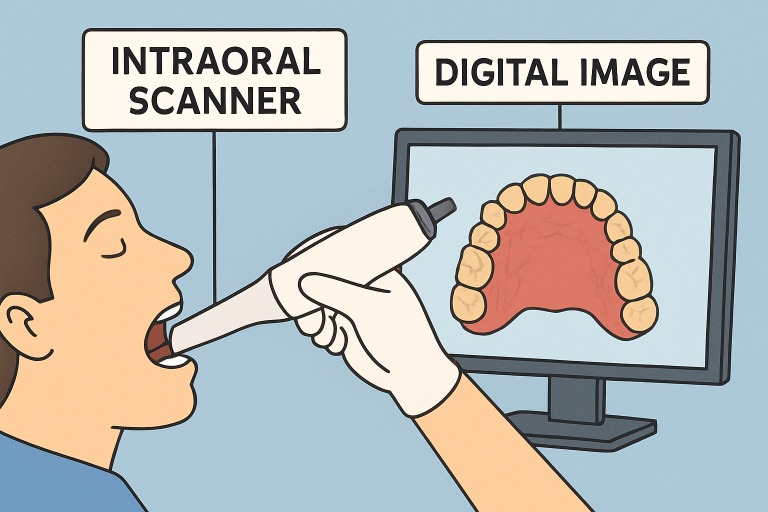
Intraoral cameras also play an important role in patient education and communication. These compact, high-resolution cameras give both patients and dental professionals a magnified view of the mouth. Patients can see and understand their oral health condition more clearly, leading to greater engagement and better-informed decisions about their treatment options.
Computer-Aided Design and Manufacturing (CAD/CAM)
CAD/CAM technology has revolutionized restorative dentistry by streamlining the creation of custom dental prosthetics. With this system, dentists can design, fabricate, and place crowns, veneers, inlays, and onlays during a single appointment. This process not only saves time but also improves patient satisfaction by eliminating the need for multiple visits and temporary restorations. The high degree of customization ensures a superior fit and function, promoting better long-term patient outcomes.
More dental laboratories are integrating CAD/CAM systems into their workflows, boosting efficiency and consistency across the industry. This widespread adoption is helping practices reduce delays and deliver higher-quality restorations.
Artificial Intelligence in Dentistry
The integration of artificial intelligence (AI) into dental practices is changing how professionals diagnose, treat, and interact with patients. AI systems process and analyze vast amounts of clinical data, X-rays, and digital impressions, revealing patterns and irregularities undetectable to the human eye. This enhanced analysis supports more accurate diagnoses and enables personalized treatment plans tailored to each patient’s needs. For example, AI-powered platforms can forecast the likely progression of dental diseases, providing valuable information for preventative interventions.
As AI technology matures, it is poised to further improve patient outcomes by increasing the precision of both diagnostics and care recommendations.
3D Printing in Dental Applications
Three-dimensional printing is rapidly becoming a cornerstone of contemporary dental practices. This technology enables the quick, cost-effective manufacture of detailed dental models, surgical guides, clear aligners, and even prosthetic teeth and crowns. Customization is a key advantage, as each device can be designed to suit each patient’s unique anatomy. By accelerating production, 3D printing reduces turnaround times and enhances the overall care experience.
For dentists, the ability to fabricate precise tools on-site improves surgical planning and accuracy, particularly in implantology and orthodontics. The technology’s versatility enables creative solutions to complex oral health challenges.
Tele-Dentistry and Remote Consultations
Tele-dentistry is expanding access to quality oral care, especially in regions where dental offices are sparse or difficult to reach. Through video consultations, dentists can provide preliminary assessments, advice for minor issues, medication recommendations, and follow-up consultations without requiring patients to make in-person visits. This remote approach is invaluable for patients with mobility issues or those living in underserved communities.
Tele-dentistry is also reducing barriers to specialist care, such as periodontists or orthodontists, making expertise more widely available while improving patient outcomes.
Final Thoughts
The ongoing integration of digital technologies in dentistry is revolutionizing how dental professionals diagnose, treat, and engage with patients. From advanced imaging to AI and tele-dentistry, these innovations are enhancing both the accuracy and personalization of care. As the adoption of digital tools continues to grow, both practitioners and patients can look forward to truly transformative advancements in dental health and experience.