
Table of Contents
- Dental Implants
- All-on-4 Technique
- Ceramic Implants
- 3D-Printed Dentures
- Stem Cell Research
- Artificial Intelligence in Dentistry
- Robotic-Assisted Procedures
- Conclusion
Experiencing tooth loss can profoundly affect an individual’s confidence and ability to chew and speak comfortably. The absence of one or more teeth may not only compromise your self-esteem but also bring about significant functional challenges in day-to-day life, such as difficulty pronouncing certain words, limited ability to eat your favorite foods, and even changes in facial structure over time. Fortunately, ongoing breakthroughs in dental care now offer multiple effective solutions for those needing to replace one or more missing teeth. These technological and scientific improvements enable dentists to customize treatment options that go beyond the capabilities of traditional dentures and bridges. Whether you are seeking a permanent fix or a temporary remedy, modern dentistry offers options that address both health and aesthetics. Consulting with a cosmetic dentist can help patients select the best treatment tailored to their unique needs and lifestyle, ensuring they receive care that aligns with both their budget and long-term oral health goals.
State-of-the-art dental techniques and materials now provide a more natural appearance, enhanced functionality, and greater durability than those available a decade ago. Current procedures focus on preserving bone health and supporting oral structures, thereby minimizing complications like bone resorption. Advancements in artificial intelligence and robotics promise even more refined care in the future, optimizing results, shortening recovery times, and increasing accessibility for patients.
Dental Implants
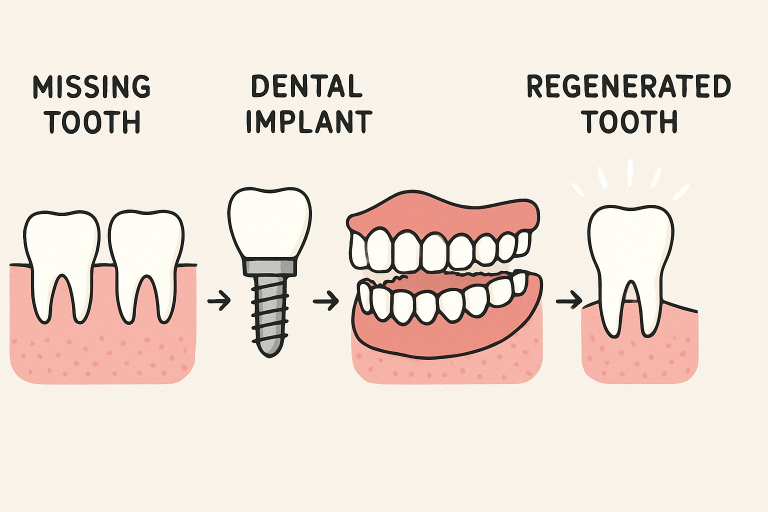
Dental implants have become a cornerstone of modern tooth replacement for good reason. They involve surgically embedding a titanium post into the jawbone, and this post serves as a replacement for the root of a missing tooth. This foundation allows the attachment of custom-made crowns, bridges, or even dentures, ensuring a stable, secure fit. Once integrated with the bone through osseointegration, the post provides stable anchorage for the restoration, mimicking the natural support of a tooth root. Dental implants prevent surrounding teeth from shifting and help evenly distribute bite forces across the jaw, improving overall oral health. Not only do dental implants restore the appearance of your smile, but they also help maintain jawbone health by preventing bone deterioration often seen after tooth loss. Because the jawbone receives regular stimulation from the implant during chewing, it is less likely to experience bone loss, helping preserve facial structure over time. For further information on the benefits and process of dental implants, Mayo Clinic offers a comprehensive guide.
All-on-4 Technique
For those missing all teeth in a dental arch, the All-on-4 technique provides a streamlined, efficient solution. This procedure uses just four implants strategically placed in the jaw to anchor a complete set of prosthetic teeth. The careful angling and positioning of the titanium posts allow fewer implants to be used without compromising stability or function. Unlike traditional approaches that may require six or more implants, All-on-4 shortens recovery time and lowers costs while delivering immediate stability. The prosthetic arch can often be placed on the very same day as implant surgery, providing patients with a transformed smile much faster than ever before. As a less invasive option, it has become increasingly popular among patients seeking full-arch restoration, offering fewer appointments and rapid results, and allowing many individuals with limited bone volume to avoid complex bone grafts.
Ceramic Implants
Ceramic implants, particularly those made from zirconia, are gaining traction among patients with metal sensitivities or who desire a more natural look at the gumline. These one-piece and two-piece systems provide an aesthetically pleasing, biocompatible alternative to titanium, combining strength with a beautiful, tooth-like color. Their lighter shade prevents a dark hue beneath the gums, even for people with thin or translucent gum tissue, contributing to a more natural overall appearance. Additionally, ceramic implants tend to attract less plaque and are not susceptible to corrosion, promoting healthier tissues and reducing the risk of inflammation around the implant. For many, ceramic implants combine function and beauty in a way that’s hard to beat, offering a holistic approach to tooth replacement without compromising on strength or longevity.
3D-Printed Dentures
Technological advancements in 3D printing have revolutionized the way dentists create and fit dentures, making the process faster and more accurate than ever before. 3D-printed dentures offer unparalleled precision, as digital imaging and computer-aided design mean that each denture is tailored to the exact contours of a patient’s mouth for optimal fit. Patients benefit from being able to try out a temporary set before committing to their finished dentures, allowing for adjustments to comfort and aesthetics. This tailored approach improves comfort, ensures a secure fit, and delivers a natural-looking result that blends seamlessly with existing teeth and gums. The materials used in 3D printing are improving every year, providing dental professionals with strong, durable, and lifelike options for their patients. For more information on the impacts of 3D printing in dental technology, refer to standardized medical reports on emerging dental solutions, such as those published by Harvard Health Publishing.
Stem Cell Research
Stem cell research is opening the possibility of growing new teeth to replace missing ones, a science-fiction concept that edges closer to reality with each discovery. Researchers are exploring ways to stimulate stem cells in the jaw or to use dental stem cells harvested from baby teeth to regenerate dental tissues, potentially allowing the creation of new roots, crowns, and gum tissue. While still in its experimental stage, this method holds immense promise for the future, representing a true breakthrough toward biological tooth replacement without employing traditional materials or implants. If successful, stem cell-based therapies would eliminate many current challenges with prosthetic solutions, such as ongoing replacement and the risks of foreign-material intolerance. They could one day revolutionize the field of restorative dentistry.
Artificial Intelligence in Dentistry
Artificial intelligence is changing the landscape of dental care by helping providers plan treatment with increased accuracy and efficiency. AI programs analyze detailed patient scans, x-rays, and dental histories, using algorithms to recommend individualized tooth-replacement approaches. By examining diverse data, these systems can predict the success of implants, dentures, and other restorations, thereby boosting patient satisfaction and clinical outcomes. AI can even assist with diagnostics, identify early signs of potential oral health issues, and streamline dental office workflows, leading to fewer errors and improved efficiency. For more depth on how AI is reshaping healthcare, Forbes examines its growing applications across various medical fields in its recent analysis.
Robotic-Assisted Procedures
Incorporating robotics into dentistry has taken surgical precision to new heights, making even the most intricate procedures more predictable and reliable. Robots can support dentists during complex interventions such as implant placement and root canal therapy, providing real-time feedback and accuracy that may be difficult to achieve by hand alone. Systems like DentiBot guide every aspect of the process, from angling the drill to placing the implant, ensuring each step is completed with exactitude, minimizing human error, and improving patient safety throughout surgery. As technology continues to evolve, patients can look forward to less downtime, fewer complications, and superior long-term results, contributing to a more comfortable overall experience at the dental office.
Conclusion
Modern dentistry now offers an impressive array of solutions for patients dealing with missing teeth. These advancements, ranging from reliable dental implants and innovative prosthetics to emerging stem cell therapies and AI-guided care, help restore both oral function and confidence. Exploring these options with your dental professional ensures you choose a personalized treatment plan that fits your health needs, lifestyle, and long-term goals. Since new developments are constantly reshaping the field, staying informed and regularly consulting with your dentist will help you make the best choices for lifelong oral health.