
Key Takeaways
- Understanding the importance of data-driven strategies in patient marketing.
- Exploring tools and technologies that facilitate data collection and analysis.
- Implementing personalized marketing approaches to enhance patient engagement.
- Addressing challenges and ethical considerations in data-driven marketing.
The Shift Towards Data-Driven Patient Marketing
Healthcare marketing has evolved rapidly, moving away from traditional one-size-fits-all tactics. Today, patient outreach revolves around data, enabling providers to create campaigns tailored to unique patient populations. With access to vast datasets, organizations can analyze patient behaviors and preferences, leading to smarter, more targeted initiatives. Furthermore, the role of online to offline attribution in healthcare is growing in importance as providers attempt to connect digital engagement with in-person visits for a clearer understanding of patient journeys.
Healthcare providers are increasingly leveraging data to enhance their marketing strategies, making them more relevant and timely in response to rising patient expectations. Utilizing accurate data insights enables effective resource allocation, identification of at-risk populations, and improved care communication, ultimately leading to better health outcomes. Technologies such as Electronic Health Records, Customer Relationship Management systems, and predictive analytics are instrumental in this transformation, enabling organizations to analyze complex healthcare data, enhance patient engagement, and foster meaningful relationships. Innovations such as patient portals further improve the quality of available data, supporting effective communication and engagement strategies.
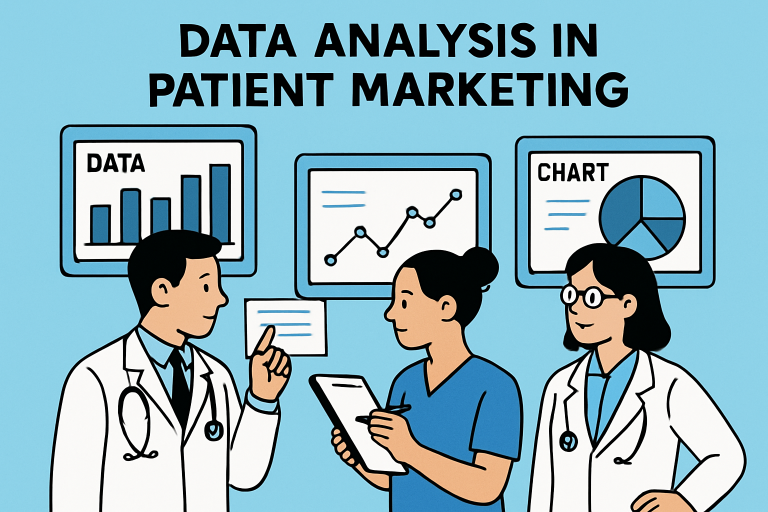
Implementing Personalized Marketing Strategies
Effective healthcare marketing hinges on personalization. By leveraging insights from EHRs, CRM records, and analytics platforms, organizations can segment their audiences and deliver tailored messages. For example, providers may send targeted wellness tips based on a patient’s chronic condition status or promote preventive screenings for at-risk age groups.
Tailored communications, including appointment reminders, educational content, and follow-up surveys, encourage patients to remain active participants in their care. These strategies foster loyalty, help reduce appointment no-shows, and ultimately improve health outcomes. As Forbes reports, personalized marketing has been shown to increase both patient satisfaction and organizational efficiency.
Beyond email campaigns, personalization can extend to website experiences, mobile app recommendations, and even call center scripts, ensuring all touchpoints reflect the patient’s specific needs and history. This comprehensive strategy ensures that patients receive the right information at the right time, fostering trust in their healthcare provider.
Addressing Challenges and Ethical Considerations
As the use of patient data expands in healthcare marketing, so too do the ethical and operational challenges. Chief among these is the responsibility to protect patient privacy and maintain data security in accordance with HIPAA and similar regulations. Healthcare marketers must ensure that all personal information is stored securely, shared appropriately, and used only for allowable purposes.
Transparency is fundamental. Providers should communicate clearly how data is collected and used, giving patients confidence and control over their information. Establishing clear consent protocols and regular audits can further safeguard patient interests.
Additional hurdles include ensuring data accuracy, integrating data from disparate systems, and managing the cost and complexity of advanced analytical tools. Navigating these challenges effectively is crucial for delivering data-driven care while upholding high ethical standards.
Case Study: Enhancing Patient Engagement Through Data Analytics
Consider a mid-sized healthcare network that recently implemented predictive analytics to improve care for patients with chronic conditions. By analyzing historical visit data and social determinants of health, the organization identified patients most at risk for hospital readmission and tailored their outreach accordingly. In situations where organizations need to hire physicians, incorporating locum doctors can provide immediate coverage while long-term staffing strategies are developed. Targeted communications and timely follow-up led to a measurable reduction in readmission rates, while overall patient satisfaction scores increased. This example illustrates how data-driven approaches can deliver real-world benefits for both providers and those they serve.
Future Trends in Data-Driven Patient Marketing
Advances in artificial intelligence (AI) and machine learning are set to revolutionize patient marketing. These tools can sift through massive datasets to reveal patterns and preferences that previously went unnoticed, allowing providers to fine-tune their outreach strategies in real time. AI-driven chatbots, for example, can answer patient questions instantly, while machine learning models can predict and prevent appointment no-shows by optimizing reminder schedules.
As these technologies mature, they will further streamline marketing efforts, deepen personalization, and improve health outcomes. Staying ahead in this evolving landscape means investing in robust data architectures and regular staff training to fully realize the potential of data-driven patient engagement.
Conclusion
Data-driven marketing is transforming healthcare organizations by enabling more targeted, efficient, and patient-centered care. By adopting advanced technologies, prioritizing personalization, and upholding privacy standards, providers can build stronger relationships with their communities and improve care outcomes. As the healthcare sector continues to evolve, those who embrace data-driven approaches will be best positioned to thrive in a landscape defined by continuous change and rising patient expectations.