
Table of Contents
- Challenges of Traditional Expense Management
- Benefits of Intelligent Expense Tracking
- Key Features of Modern Expense Management Tools
- Implementing Intelligent Expense Tracking in Your Business
- Conclusion
For today’s fast-paced businesses, maintaining control over financial operations has taken on a new level of urgency. The sheer volume of business expenses, ranging from travel costs to software subscriptions, creates countless opportunities for errors and inefficiencies to creep into the process. Manual payment processing methods, such as handwritten reports, emails, and physical receipts, can lead to costly mistakes, excessive delays, and headaches for finance teams. As companies grow, these challenges multiply, creating administrative bottlenecks and often undermining confidence in the accuracy of financial data. That is why businesses are increasingly seeking smarter, technology-driven solutions that are purpose-built for seamless expense management workflows. These advanced platforms not only enhance data accuracy but also help ensure compliance and improve overall efficiency throughout the organization, freeing finance teams to focus on more strategic work.
Intelligent expense tracking leverages the latest advancements in technology, such as artificial intelligence and automation, to automate repetitive, error-prone financial tasks. This thoughtful approach sidesteps the bottlenecks and inaccuracies that are often found in paper-based processes. Businesses that try to get by with old-fashioned systems are much more likely to struggle with missing receipts, unauthorized or unapproved spending, and ongoing reconciliation issues that eat up valuable time. Shifting from outdated, manual processes to automated expense management lays the groundwork for improved visibility into spending patterns and more effective resource allocation. The result is a system in which both employees and financial decision-makers can remain confident that expenses are accurately tracked and processed promptly.
Challenges of Traditional Expense Management
Traditional expense management is often built on manual reporting, spreadsheets, and a slow approval cycle riddled with inefficiencies. Employees are typically responsible for collecting and storing paper receipts, manually entering data into spreadsheets, and submitting stacks of physical documents for manager review. This approach leads to a range of pitfalls. Notably, manual data entry opens the door to typos, while lost receipts can significantly undermine the accuracy of expense reports. Prolonged reimbursement cycles lead to employee frustration, making the process unpopular with both spenders and finance teams. According to research from Harvard Business Review, companies can lose millions each year to fraud and inefficiency stemming from weak expense controls and a lack of rigorous oversight.
Another critical downside of manual processes is that expense data is often siloed, making it nearly impossible to aggregate or analyze in real time. Without automated tracking, finance teams may not spot overspending or policy violations until well after they occur, making proactive decision-making and budget enforcement difficult. The lack of reliable, up-to-date insight into cash flow and spending trends can expose an organization to unnecessary risk and result in reactive, rather than strategic, financial management.
Benefits of Intelligent Expense Tracking
Modern, intelligent expense-tracking platforms leverage artificial intelligence, machine learning, and automation to address the most common pain points in expense management. This brings a host of advantages to businesses striving for operational excellence and financial transparency:
- Accuracy: Automatic receipt scanning and data entry minimize human error, ensuring the books remain reliable. AI can quickly extract, verify, and categorize expense details, resulting in more reliable and consistent reporting across the organization.
- Efficiency: Automated approval workflows significantly reduce the turnaround time for expense reviews, reimbursements, and reconciliations. Administrative staff spend less time on low-value tasks, freeing up time to devote to high-impact initiatives and strategic priorities.
- Compliance and Control: Intelligent systems embed policy controls into the workflow, ensuring every transaction is checked against both internal policies and external regulations. These tools automatically alert managers to anomalies or noncompliant expenses, simplifying audits and further reducing the chance of fraud or policy violations.
- Real-Time Insights: With immediate access to up-to-date spending data via dashboards and reporting tools, business leaders can spot trends, quickly identify cost-saving opportunities, and address wasteful habits more effectively than ever before. This enables ongoing budget and resource optimization, supporting strategic growth and resilience.
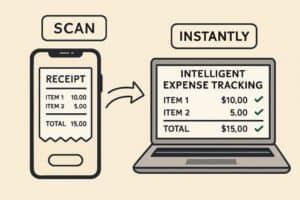
For businesses ready to future-proof their finances, intelligent tools can reduce manual data work by up to 80% and significantly improve process accuracy. These improvements help organizations achieve audit readiness and more predictable financial planning. In fact, companies that adopt innovative expense-tracking solutions often experience greater audit-readiness, faster close cycles, and higher employee satisfaction. For those interested in a broader exploration of best practices in expense management, Forbes offers a comprehensive guide from industry experts.
Key Features of Modern Expense Management Tools
As the landscape of financial technology continues to advance, the latest expense management platforms are designed with a host of robust features that cater to the complexities of modern business. When evaluating which software solution to invest in, organizations should look for tools that offer the following capabilities:
- Automated Receipt Processing: AI-driven apps use optical character recognition to extract relevant data from photos of receipts. They automatically categorize and match expenses to transactions, eliminating tedious manual entry and reducing processing time.
- Built-In Policy Controls: These are configurable rules that flag out-of-policy transactions or breaches in spending limits. By automating policy enforcement, businesses can sustain internal controls and promote accountability without introducing cumbersome approval steps that slow productivity.
- Integration Capabilities: The most effective platforms seamlessly connect with existing accounting, HR, and ERP systems. Such integrations ensure end-to-end visibility, frictionless data reconciliation, and easier financial consolidation, centralizing data and breaking down silos.
- Mobile Access: Mobile-first platforms empower employees to process expenses directly from their smartphones or tablets. This feature enhances compliance and ensures that distributed or remote teams can stay on top of their expense reporting duties from anywhere, at any time.
Popular solutions like QuickBooks and Expensify clearly demonstrate how artificial intelligence is transforming expense reporting, reconciliation, and anomaly detection in real-world business scenarios. Companies using these platforms consistently report higher user satisfaction and measurable gains in productivity and compliance. These technologies also provide finance leadership with the actionable insights needed to further optimize spending management and employee experience.
Implementing Intelligent Expense Tracking in Your Business
Successfully adopting intelligent expense management starts with a well-thought-out, methodical approach. The first step is to assess your current workflows to identify existing gaps or recurring pain points. Engage with department heads, finance teams, and end users to understand their requirements and the obstacles they face with current processes. Next, invest time researching solutions that align with your needs, especially those with intuitive design and robust integration capabilities. During the vendor selection phase, carefully evaluate each option for ease of use, scalability, and compatibility with your existing technology environment. It is also crucial to secure buy-in from key stakeholders early in the process to ease the change management journey.
Once a platform has been selected, consider rolling it out in phases to different business units or geographies. A phased deployment allows your team to resolve any unforeseen issues before organization-wide implementation. Conduct comprehensive, hands-on training sessions to ensure that all employees understand how to use the new features effectively. Encourage open communication and collect feedback frequently to surface and address adoption hurdles early, thereby fostering greater engagement. Finally, monitor platform performance after the rollout and use analytics dashboards to review usage patterns, detect potential bottlenecks, and drive continuous improvement. Structured optimization will ensure that your investment continues to deliver returns over the long term.
For more detailed guidance, Gartner’s analysis of expense management solutions highlights the value of ongoing assessment, frequent user testing to optimize spending management and the employee experience, and furthering your organization’s return on technology investments.
Conclusion
The accelerating shift toward intelligent expense tracking is fundamentally reshaping how modern organizations approach their financial operations. Automated, AI-driven tools deliver substantial improvements in data accuracy, process speed, and policy compliance, while providing financial leaders with real-time insights for more intelligent, more strategic decisions. By embracing these advanced solutions, organizations stand to gain tighter control over their spending, enhanced operational resilience, and an infrastructure that supports scalable growth even in dynamic, uncertain market environments. For businesses committed to efficiency, compliance, and agility, intelligent expense tracking will undoubtedly remain a cornerstone of best practices for years to come.