Table of Contents
- Prefabrication and Modular Construction
- Building Information Modeling (BIM)
- Sustainable Building Materials
- 3D Printing in Construction
- Smart Building Technologies
- Green Roofs and Living Walls
- Energy-Efficient Designs
- Conclusion
Modern construction is experiencing a transformation fueled by innovation, reshaping how communities are designed and lived in. From eco-friendly materials to smart technologies, new methods are making construction faster, safer, and more sustainable. These advancements are at the heart of creating dynamic spaces that support both present and future needs. For those embarking on renovation or building projects, working with Home Remodeling Experts familiar with modern solutions is crucial to achieving world-class results.
Today’s cutting-edge building strategies help communities thrive, offering improvements in safety, comfort, and environmental impact. Enhanced collaboration, streamlined project timelines, and a focus on energy conservation are just a few changes these practices bring. Neighborhoods benefit as public spaces, residential complexes, and commercial buildings grow smarter and more resilient, meeting the expectations of a new generation.
Strong emphasis on sustainability also means new construction pays greater attention to durability and maintenance. Residents and developers increasingly prioritize sustainable development through responsible resource use and innovative planning approaches. Understanding these trends can help anyone invested in real estate or urban growth make informed decisions about upcoming projects.
Prefabrication and Modular Construction
Prefabrication and modular construction involve producing building components off-site and assembling them at the construction location. This approach cuts down on project duration, site disruption, and material waste, while also increasing safety for workers. Recent projects, including modular high-rises in cities like London, exemplify the method’s potential by rapidly assembling entire buildings in record time. Prefabrication supports modern urbanization needs while reducing costs and resource consumption. Experts cite the approach’s contribution to sustainable urban growth as significant, making it a favorite among developers seeking to meet green building standards. According to the World Economic Forum, this method directly supports sustainable development goals.
Building Information Modeling (BIM)
BIM refers to the process of creating and managing digital representations of the physical and functional characteristics of places. This technology encourages collaboration among architects, engineers, and contractors, minimizing errors and reducing unforeseen expenses. BIM integration improves coordination, scheduling, and cost estimation, making project delivery smoother and more predictable. The adoption of BIM is transforming the construction industry into a more collaborative, tech-driven sector. By providing real-time updates on project progress, BIM allows for quick adjustments, preventing delays and overspending.
Sustainable Building Materials
The adoption of sustainable materials like bamboo, recycled steel, and cross-laminated timber is essential in combating climate change and reducing emissions. These eco-friendly alternatives offer strength, visual appeal, and often lower lifecycle costs than conventional materials. Developers are increasingly looking to source local and recycled products to minimize the carbon footprint of new buildings. Innovative building materials also contribute to healthier indoor environments by reducing toxins and improving air quality. As the technology improves, these materials are becoming more accessible and affordable, making sustainable construction a realistic option for projects of all sizes.
3D Printing in Construction
3D printing is revolutionizing building design and construction by enabling the creation of complex forms that are tough to produce with traditional methods. Houses, bridges, and even office spaces have been 3D-printed in just days, drastically cutting down on labor costs and minimizing waste. This approach is particularly beneficial for creating affordable, resilient housing in disaster-prone regions. 3D building techniques are expected to become more prevalent as the industry moves towards more efficient and sustainable solutions. These advances signal a future where custom homebuilding is not only faster but also less expensive and more environmentally responsible. You can read about other breakthrough building technologies at Build News.
Smart Building Technologies
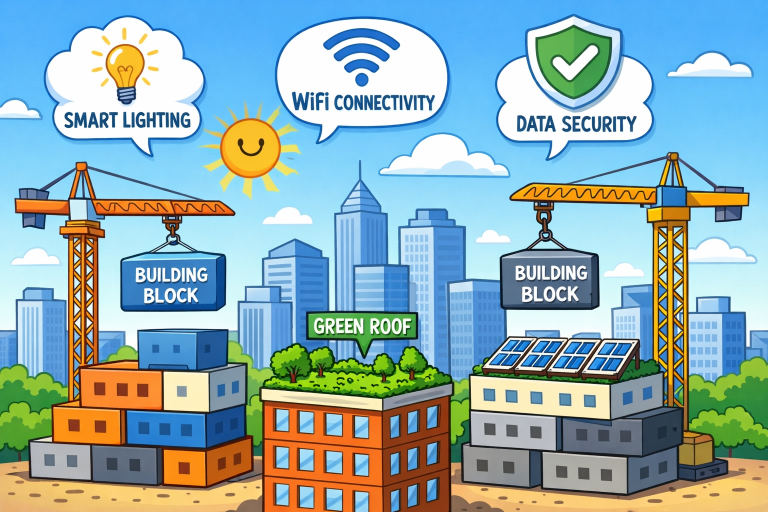
Smart building technologies now include Internet of Things (IoT) devices for real-time monitoring and automation of lighting, climate, and security systems. Residents and building managers can control energy consumption remotely, improving efficiency and saving money. The integration of data-driven sensors and systems also contributes to enhanced occupant comfort, safety, and health. As smart technology becomes more affordable, its adoption is spreading rapidly through both residential and commercial properties. The impact of these systems extends beyond convenience to improved resource management and lower operational costs over time.
Green Roofs and Living Walls
Green roofs and living walls are increasingly featured in urban environments, offering both aesthetic and environmental advantages. These installations help reduce heat islands, improve air quality, and create new habitats for urban wildlife. Green roofs can also extend the lifespan of roof membranes by shielding them from UV exposure and temperature extremes. Living walls, planted with a variety of flora, bring nature directly into city settings and promote wellness among building occupants. Their role in urban resilience is gaining traction, as they help mitigate the effects of climate change while beautifying concrete-heavy landscapes.
Energy-Efficient Designs
Energy-efficient building design prioritizes passive strategies such as optimizing window placement and insulation, alongside the use of renewable resources like solar and wind power. These measures significantly lower energy usage and reduce operating costs for property owners. Incorporating high-performance materials and energy-efficient systems creates buildings that are both comfortable and cost-effective to operate. Cutting-edge designs maximize daylight usage and limit heat loss or gain, illustrating the power of architectural strategy in sustainability efforts. Energy-efficient homes and offices are not only affordable to run but also contribute positively to overall community well-being.
Conclusion
Innovative construction practices are shaping the cities and communities of tomorrow. Approaches like modular construction, BIM, and sustainable materials become mainstream, they are setting the groundwork for smarter, greener, and more resilient urban spaces. The integration of these innovations ensures that development meets both today’s demands and future generations’ needs, making them essential tools for progress in the built environment.