
The Core Pillars of Modern Real Estate Living
 The way we live is undergoing a profound transformation. No longer just four walls and a roof, our homes are becoming intelligent, responsive, and deeply integrated with our lifestyles. This shift marks the rise of Modern real estate living, a concept that redefines comfort, convenience, and community.
This extensive guide will take you through the innovations that are shaping today’s residential spaces. We will explore the defining characteristics of modern properties, from cutting-edge smart home technologies and sustainable designs to the unique amenities and lifestyle features that set them apart. We will also delve into current market trends across key locations and discuss how digital tools are revolutionizing the search for your next home. Join us as we uncover what it truly means to live in the modern era.
Modern real estate living is more than just a contemporary aesthetic; it’s a comprehensive approach to residential design and functionality that prioritizes convenience, efficiency, and well-being. At its heart, modern living is defined by several key characteristics: the seamless integration of smart technology, a commitment to sustainable and eco-friendly designs, open and flexible floor plans that adapt to diverse lifestyles, and a strong emphasis on indoor-outdoor connectivity. We see a preference for natural materials, refined finishes, and expansive floor-to-ceiling windows that maximize natural light and offer breathtaking views. This paradigm shift moves beyond traditional housing to create spaces that actively enhance our daily lives.
This evolution from traditional properties to modern residences reflects a growing demand for homes that are not only visually appealing but also highly functional and aligned with contemporary values.
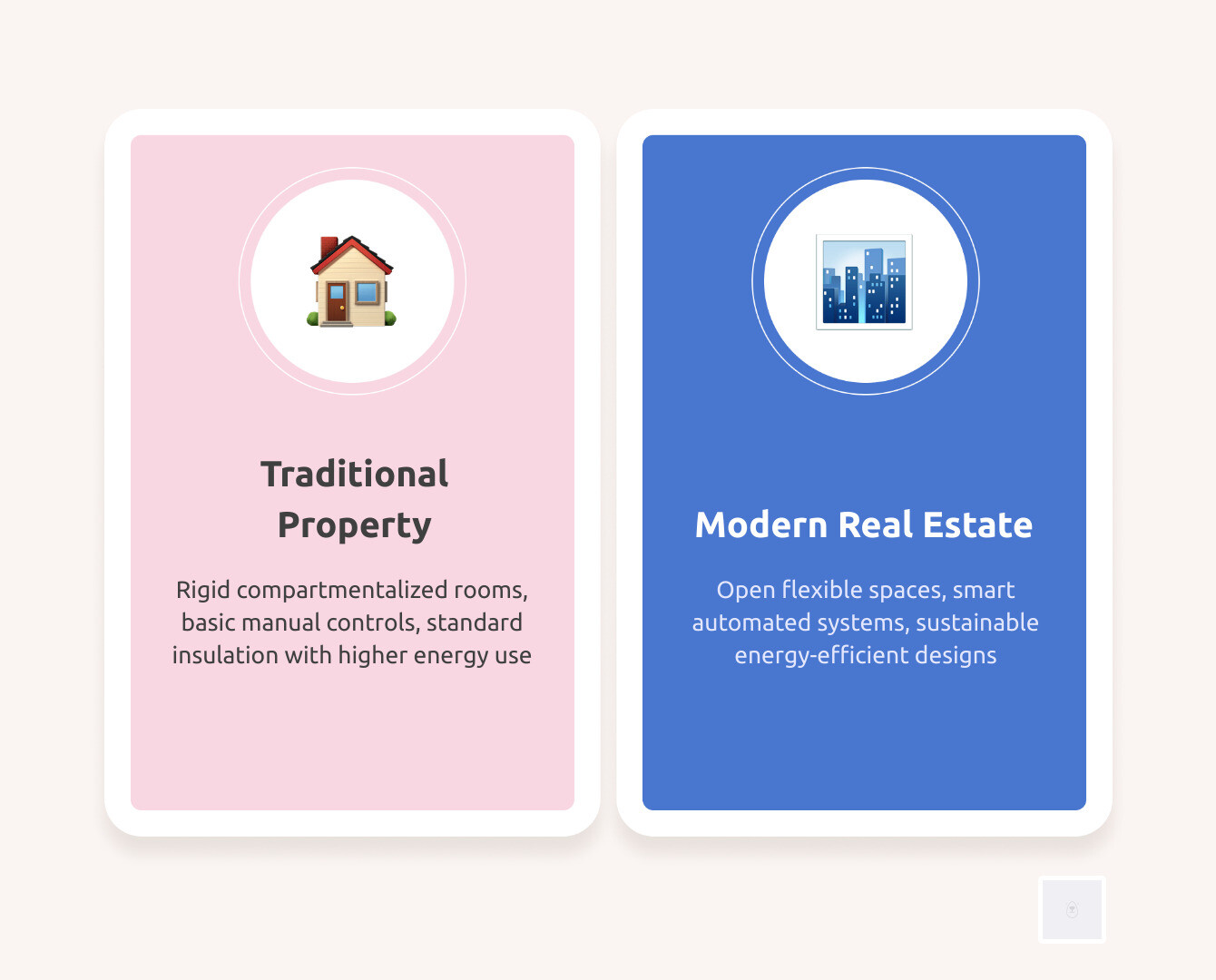
Feature Traditional Property Modern Real Estate Layout Defined, often compartmentalized rooms Open-concept, flexible, multi-functional spaces Technology Basic electrical, manual controls Integrated smart home systems, automated controls Energy Use Standard insulation, less efficient appliances Sustainable materials, energy-efficient systems Materials Conventional wood, brick, carpet Natural, recycled, low-VOC materials, refined finishes Connectivity Limited outdoor access Seamless indoor-outdoor flow, expansive windows Amenities Basic utilities, individual property focus Community-centric, wellness, co-working, pet-friendly Smart Technology Integration in Modern Real Estate Living
The integration of smart home technologies is arguably the most defining characteristic of modern real estate. These high-tech features transform a house into an intelligent, responsive living environment, offering unparalleled convenience, security, and efficiency. We’re talking about systems that learn your preferences and anticipate your needs.
Imagine walking into your home where Lutron lighting automatically adjusts to the perfect ambiance, or your smart thermostat proactively optimizes temperature settings based on your schedule and external weather conditions. Integrated security systems offer peace of mind with remote monitoring and smart locks. For the environmentally conscious and tech-savvy, EV-charging stations are becoming a standard offering, reflecting the broader shift towards sustainable transportation.
Beyond these, modern properties often feature comprehensive smartphone connectivity, allowing residents to manage everything from centralized climate control and automated shades to high-tech appliances with a simple tap on their device. This level of control and automation not only simplifies daily tasks but also contributes to significant energy savings and a more comfortable living experience. These technological advancements are no longer luxuries but essential components that future-proof a property and enhance its long-term value.
Community and Wellness in Modern Real Estate Living
Modern real estate extends beyond the individual unit, fostering vibrant communities and prioritizing resident well-being through an array of curated amenities. These features are designed to support a holistic lifestyle, encouraging social interaction, physical activity, and mental relaxation.
Many modern developments boast rooftop lounges and social terraces, offering residents spaces to unwind, entertain, and connect while enjoying panoramic views. Wellness suites, often equipped with state-of-the-art fitness centers and even lap pools, provide convenient access to health and exercise. Some even include saunas and spas for ultimate relaxation.
The rise of remote work has also led to the inclusion of sophisticated co-working spaces within residential buildings, blurring the lines between home and office. Developers are also increasingly recognizing the importance of our furry friends, incorporating pet-friendly amenities like dedicated pet washing stations and indoor dog runs. The emphasis on indoor-outdoor flow is evident in common areas, with fire pits and BBQ stations creating inviting spaces for gatherings. These community and wellness-focused amenities are not just add-ons; they are integral to the modern living experience, cultivating a sense of belonging and enhancing the quality of life for all residents.
Digital Transformation in Property Search and Management
The real estate journey itself has been revolutionized by digital tools and virtual experiences, making the process of finding and securing modern properties more efficient and accessible than ever before. We’ve moved beyond static photos and brochures to immersive, interactive platforms that provide a truly comprehensive view of a property.
Prospective buyers and renters can now embark on detailed 3D walkthroughs, allowing them to virtually navigate every corner of a home from anywhere in the world. This capability is particularly beneficial for those relocating or with busy schedules, offering a realistic sense of space and flow without needing to be physically present. The convenience extends to the transactional side, with remote closings becoming increasingly common, streamlining what was once a complex, in-person process.

From virtual coordination with real estate agents to digital lease management systems, technology has simplified every step. These immersive experiences are supported by robust, data-driven modern real estate platforms that provide real-time market data, insights into neighborhood trends, and streamlined application processes. This digital evolution empowers individuals with more information and flexibility, transforming property search from a logistical challenge into an engaging, user-friendly experience. For those seeking comprehensive insights and easy navigation through available properties, resources like Data-driven modern real estate are invaluable.
Sustainable Architecture and Wellness-Centric Design
A cornerstone of modern real estate living is its profound commitment to sustainability and wellness. These properties are designed not only to minimize environmental impact but also to enhance the health and comfort of their occupants. This approach goes far beyond superficial greenwashing, integrating eco-friendly practices and materials from the ground up.
Many modern developments aim for certifications like LEED, signifying a commitment to high standards of energy efficiency and environmental design. We often see the incorporation of renewable energy sources such as solar panels, coupled with advanced thermal insulation to reduce heating and cooling demands. The strategic use of natural light through large windows and thoughtful architectural design reduces reliance on artificial lighting, while also fostering a connection to the outdoors. Biophilic design principles, which integrate natural elements and processes into the built environment, are increasingly common, contributing to a sense of calm and well-being.
Beyond energy, water conservation is addressed through efficient fixtures and systems. Inside, properties feature energy-efficient appliances and robust air filtration systems to improve indoor air quality. Even plumbing systems are evolving, with materials like PEX tubing offering durability and efficiency. The selection of low-emission materials further reduces the carbon footprint and promotes a healthier indoor environment. This holistic approach to design ensures that modern homes are not just structures, but living spaces that actively support both planetary health and personal wellness. This commitment to thoughtful, sustainable design is evident across various segments of the market, including in specialized offerings such as Modern Detroit furnished living, where efficiency and contemporary comfort are paramount.
Regional Trends and Market Evolution
Modern real estate living manifests differently across various regions, each reflecting local culture, climate, and market demands. From sun-drenched deserts to bustling urban centers, we observe unique adaptations of modern design principles.
In places like Palm Springs, California, the legacy of mid-century modern architecture continues to inspire, with many homes featuring clean lines, open spaces, and seamless integration with the desert landscape. These properties often blend historical design elements with contemporary upgrades, creating timeless yet functional residences.
Across the globe, Dubai stands out as a hub for luxury modern real estate. Here, innovation reigns supreme, with properties boasting cutting-edge architecture, smart home systems, and opulent amenities. The market emphasizes high-tech features and extravagant designs, catering to a discerning international clientele seeking the pinnacle of modern luxury living.
Closer to home, Chicago’s River North neighborhood exemplifies urban modern living, with high-rise apartments offering panoramic city views, sophisticated amenities, and highly walkable access to cultural attractions and dining. These developments often feature floor-to-ceiling windows, smart home technology, and community spaces like rooftop pools and fitness centers.
Meanwhile, markets like San Antonio, TX, are experiencing their own shifts. While the median listing home price remains accessible at around $284,945, and homes spend an average of 81 days on the market, the demand for modern features and updated designs is growing. With over 12,933 active homes for sale, including popular zip codes like 78253 and 78245, buyers are increasingly seeking properties that offer contemporary comforts and efficiencies.
Further east, New Rochelle, NY, showcases the appeal of suburban-urban hybrids, combining waterside living with quick access to Manhattan. These developments often prioritize sustainable design and trendsetting amenities, offering a balanced lifestyle. Even in areas like Corona, CA, luxury modern homes, such as a 5-bed, 4-bath property listed at $1,275,000, demonstrate how extensive upgrades and refined finishes, from commercial-grade appliances to solar panels with battery storage, define elevated comfort.
We also see a growing appeal for suburban modern living, which offers more space, larger yards, and a stronger sense of community compared to urban high-rises. This trend, often driven by post-pandemic preferences for home offices and outdoor areas, is creating new “hot zones” and redefining home value. High-rise innovation and historic conversions are also significant, with developers transforming older structures into modern living spaces that retain character while offering contemporary conveniences.
Frequently Asked Questions about Modern Living
As we navigate the evolving landscape of real estate, several common questions arise regarding what truly defines modern living. Here, we address some of these inquiries to provide clarity on this dynamic trend.
What defines a modern property in today’s market?
A modern property in today’s market is characterized by a blend of technological integration, sustainable design, flexible and open floor plans, lifestyle-centric amenities, and innovative architecture. It’s a home that is smart, efficient, adaptable, and designed to enhance the daily lives of its occupants. This includes features like smart home systems, energy-efficient appliances, natural materials, and communal spaces that foster well-being.
How does smart home technology impact long-term property value?
Smart home technology significantly impacts long-term property value by offering operational efficiency, enhanced security, and future-proofing assets. Properties equipped with smart systems often have lower utility bills due to optimized energy use, which is a major draw for buyers. Enhanced security features provide peace of mind, adding to a home’s desirability. As technology advances, a smart home is easier to upgrade and integrate with new systems, making it more resilient to obsolescence and maintaining its appeal to a broader market of tech-savvy buyers.
What are the benefits of wellness-focused residential amenities?
Wellness-focused residential amenities offer a multitude of benefits, contributing to a better work-life balance, fostering community engagement, and supporting physical and mental health. Features like fitness centers, yoga studios, communal gardens, and even meditation spaces provide convenient opportunities for residents to prioritize their well-being without leaving home. These amenities also create opportunities for social interaction, building a stronger sense of community. They offer convenience, reduce stress, and enhance the overall quality of life, making a property more attractive and valuable.
Conclusion
The journey through modern real estate living reveals a landscape shaped by relentless innovation and a profound understanding of contemporary needs. We’ve seen how the convergence of technological advancement, sustainable practices, and thoughtful design is creating residential environments that are not just places to live, but platforms for enhanced lifestyles. From the intelligent automation of smart homes to the nurturing embrace of wellness-centric communities, modern properties are redefining comfort, efficiency, and connection.
This evolution is not confined to a single architectural style or geographic location; it’s a global phenomenon adapting to regional nuances, whether in the luxury high-rises of Dubai, the mid-century inspired homes of Palm Springs, or the urban-suburban blends emerging in New Rochelle. The digital transformation has made the search for these innovative spaces more accessible and immersive than ever before, empowering individuals to find a home that truly aligns with their aspirations.
As we look to the future, the trajectory of modern real estate is clear: it will continue to prioritize holistic living environments that are responsive, responsible, and enriching. These are not just buildings; they are dynamic ecosystems designed to support a sustainable future and foster a deeper sense of well-being.