
Key Takeaways
- Voice AI increases safety by reducing the need for physical interaction with vehicle controls.
- Personalization delivers a tailored in-car experience for each driver and passenger.
- Connected platforms link vehicles to broader ecosystems, such as smart homes or workplaces.
- Innovations in voice commerce offer new ways for automakers to generate revenue and add value.
- Technical challenges, like privacy management and speech accuracy, must be addressed for widespread adoption.
Voice artificial intelligence (AI) is transforming the way people interact with vehicles, delivering a major leap in convenience, connectivity, and safety to drivers and passengers everywhere. Today, modern vehicles leverage voice-powered technology to offer hands-free assistance for everything from navigation to messaging. Companies dedicated to developing advanced voice AI platform for automotive companies are at the heart of this revolution, supporting car manufacturers as they redefine the driving experience.
Voice AI in the automotive industry is more than just adding virtual assistants; it is fundamentally changing how vehicle occupants communicate with their surroundings. These advances enable responsive controls, seamless personalization, and integration with home and business environments, making every trip smoother and more enjoyable.
Integrating robust AI-powered voice solutions helps carmakers provide drivers with direct, natural interactions. This results in a safer, more productive time on the road, where distractions are minimized, and every task can be accomplished with just a few words.
Recent breakthroughs in natural language processing mean that today’s automotive voice assistants are more accurate and responsive than ever, even in challenging environments. The future is pointing toward cars that act as smart, helpful companions for every journey.
Enhancing Safety Through Hands-Free Control
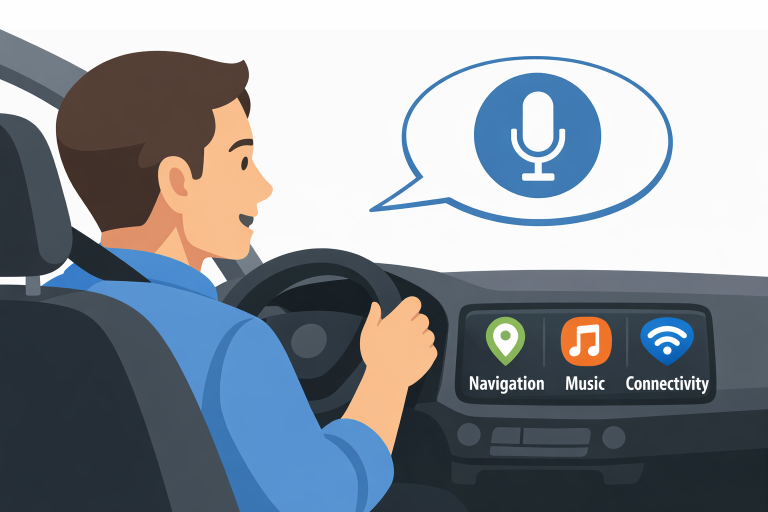
One of the core benefits of voice AI in vehicles is its contribution to road safety. Drivers can use voice commands to perform key actions such as changing directions on their GPS, answering calls, or adjusting the radio without diverting their attention from driving. The National Highway Traffic Safety Administration reports that distracted driving accounts for a significant portion of accidents each year. With voice AI reducing the need for manual input, drivers can keep their eyes on the road and hands on the wheel, leading to fewer distractions and potentially fewer accidents.
Personalized and Seamless User Experiences
Today’s voice AI systems are highly sophisticated, able to interpret and act on a wide range of conversational commands. Whether a driver wants to fine-tune music selections, request navigation updates, or control the temperature, the voice assistant responds based on user preferences and habits. This high level of personalization not only enhances comfort but also streamlines routines for busy travelers, making in-car experiences more pleasurable and less stressful.
Integration with Smart Home Devices
Modern vehicles equipped with advanced voice AI are no longer isolated machines. Integration with smart home technology allows drivers to manage IoT-connected devices remotely. From the car, users can unlock doors, adjust thermostats, check security cameras, or switch on lights using simple voice commands. This connectivity bridges the gap between personal, work, and travel life, creating a seamless ecosystem that extends far beyond the vehicle itself.
Voice Commerce and New Revenue Streams
The commercial potential of in-car voice assistants is only beginning to be realized. Drivers can now place orders at coffee shops, make dinner reservations, or shop online using their voices, all from the comfort of their vehicle. This development opens up new revenue models for automakers, who can form partnerships with brands and service providers for exclusive deals. The convenience of voice commerce meets the growing demand for contactless services and on-the-go transactions, positioning car manufacturers as major players in the evolving e-commerce landscape.
Challenges in Voice AI Implementation
Despite all its promises, voice AI integration into automobiles faces a few significant obstacles. Speech recognition must work reliably in noisy conditions common in cars, such as with open windows or background conversations. Privacy is another pressing issue: voice assistants need to ensure that personal data and voice commands remain secure and confidential, meeting both regulatory and consumer expectations. These challenges will require continuous technical development and collaboration across the automotive and technology sectors.
The Road Ahead for Voice AI in Automobiles
The trajectory of voice AI in vehicles promises increasingly advanced features and broader connectivity, making the in-car environment more intelligent every year. As these technologies become more common, the automotive world may see a shift to vehicles as personalized digital hubs that add value beyond transportation. Further reading on this trend can be found in the article from Reuters deep dive into the race for smarter in-car assistants.
In summary, voice AI is reshaping in-car experiences by elevating safety, personalization, and connectivity. Automakers embracing these changes are set to unlock new possibilities for drivers, passengers, and the industry as a whole, as voice technology continues its rapid evolution.
Increasing Accessibility and Inclusivity
The adoption of voice AI technology in automobiles also significantly increases accessibility for people with disabilities or mobility limitations. For individuals who have difficulty operating traditional vehicle controls, voice-activated systems provide newfound freedom and autonomy. This inclusive approach allows users to interact with their cars in ways that were previously difficult or impossible, such as issuing commands without using their hands or reading complex screens. By making vehicles more accessible, automakers are broadening their customer base and ensuring that driving innovations benefit everyone, regardless of physical ability.
Customization and Multi-Language Support
A notable advancement in modern voice AI systems is support for multiple languages and dialects, making global vehicle fleets more accommodating for international drivers and passengers. Users can easily switch between languages or customize the assistant to understand regional accents and colloquialisms, which helps foster a sense of familiarity and comfort. This focus on localization ensures that the technology meets the needs of diverse user groups, further extending the reach and appeal of in-car voice assistants on a global scale.
Continuous Updates and Cloud Connectivity
Another key advantage of voice AI is its ability to improve over time via cloud-based software updates. Manufacturers can deploy new features, security enhancements, or expanded command libraries remotely, ensuring that vehicles remain up-to-date with the latest voice technologies throughout their lifecycle. This approach reduces the need for hardware overhauls and ensures a consistently high-quality user experience, as improvements are automatically delivered with minimal disruption to drivers and passengers.
Ultimately, the fusion of AI with automotive design reflects a larger technological movement toward smarter, safer, and more immersive mobility. Voice AI will continue to be a cornerstone of that evolution, empowering drivers and passengers to stay connected and in control while traveling into the future.