
Key Takeaways
- Understanding the role of each knife improves your kitchen efficiency and safety.
- Choosing high-quality knives tailored for their intended purpose elevates precision and durability.
- Routine care and maintenance preserve sharpness and extend the life of your blades.
Table of Contents
- The Chef’s Knife: A Versatile Essential
- Paring Knife: Precision for Small Tasks
- Serrated Knife: Mastering Bread and Soft Fruits
- Boning Knife: Navigating Meat and Poultry
- Santoku Knife: Japanese Precision
- Cleaver: Powerhouse for Heavy-Duty Chopping
- Knife Maintenance: Ensuring Longevity
- Conclusion
Having the right kitchen knife for each task is crucial for safety and results. Different knives serve different purposes, ensuring better performance and a safer, more enjoyable cooking experience. Apache Knifeworks offers quality blades tailored for various needs. Properly chosen knives improve efficiency and accuracy and reduce fatigue and injury. Knowing which knife is best for peeling, chopping, slicing, or deboning streamlines prep and preserves ingredients. While many designs exist, a few versatile options meet most home cooking needs, with selection based on durability, sharpness, and balance. Resources such as Texas made knives can also help users better understand craftsmanship, blade selection, and proper handling techniques. Regular maintenance, like cleaning, honing, and proper storage, keeps knives performing well for years and enhances your cooking.
The Chef’s Knife: A Versatile Essential
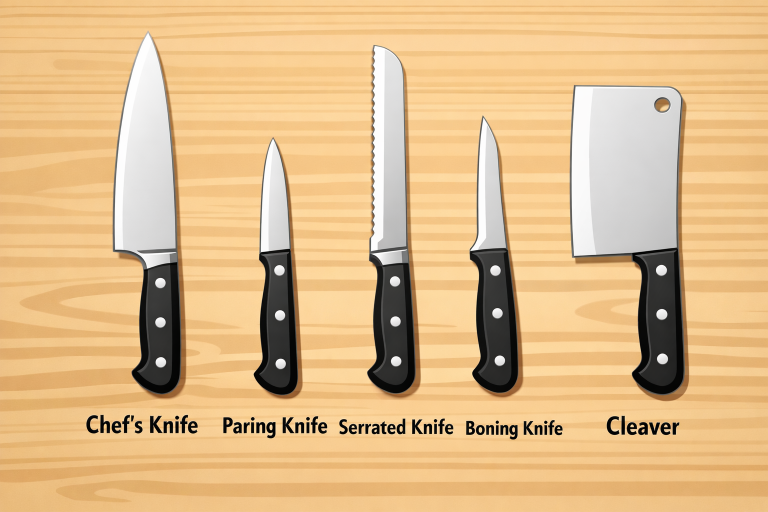
The chef’s knife is the backbone of most kitchens. Ranging from 6 to 12 inches, its broad, slightly curved blade allows for a smooth rocking motion when chopping, slicing, and mincing. This knife is perfect not only for vegetables but also for proteins, herbs, and even some tricky fruits. Because of its versatility, it can often substitute for other knives, though specialized tools will always be more efficient for specific tasks. When shopping for a chef’s knife, look for a comfortable grip, a well-balanced blade, and quality steel that retains its sharpness over time.
Paring Knife: Precision for Small Tasks
The paring knife, with its short 3 to 4-inch blade, offers unmatched control for delicate work. It excels at peeling, trimming, and shaping fruits and vegetables, as well as deveining shrimp and removing seeds from peppers. Its small size allows you to maneuver in tight spaces and handle intricate jobs that a larger knife would make awkward or dangerous. A paring knife should be lightweight and sharp to minimize the effort needed for each task. It’s one of the most vital knives for detail-oriented kitchen projects.
Serrated Knife: Mastering Bread and Soft Fruits
Featuring a tooth-like edge, the serrated knife is built to cut through surfaces that would be squished by straight blades. Its sawing motion lets you effortlessly slice crusty breads, flaky pastries, and soft foods like tomatoes, citrus, or peaches. The long 10-inch blade ensures clean cuts with minimal crushing. Serrated knives retain their sharpness longer than smooth blades, but they eventually require specialty sharpening tools. When slicing artisan bread or preparing sandwiches, a serrated knife is the tool you’ll rely on again and again.
Boning Knife: Navigating Meat and Poultry
Meat preparation requires a blade that is both precise and flexible. The boning knife has a thin, sharp, and often flexible 5 to 7-inch blade, ideal for getting close to the bone and minimizing waste. Whether you are deboning a chicken, filleting fish, or trimming fat from steaks, its shape allows you to make accurate cuts that follow the natural contours of the meat. Using a boning knife reduces hand fatigue and helps maintain the integrity of your cuts, resulting in more attractive and evenly cooked portions.
Santoku Knife: Japanese Precision
The santoku knife, meaning “three virtues” in Japanese, is revered for its ability to slice, dice, and chop with ease. Its straight-edged, typically 5 to 7-inch blade is lighter and thinner than many Western knives, making it especially adept at creating fine, thin slices. Often featuring granton edges (hollow dimples) to reduce food sticking, santoku knives are favored for vegetables, fish, and boneless meats. They highlight a blend of accuracy and versatility, reflecting Japanese culinary techniques renowned for precision and presentation. More on the differences between chef’s and santoku knives can be found in the New York Times.
Cleaver: Powerhouse for Heavy-Duty Chopping
The cleaver commands attention with its size and weight. Used mainly for tough, heavy-duty tasks, its broad, rectangular blade can break through bones, joints, and dense vegetables like squash. More than just a butcher’s tool, the cleaver is also useful for crushing garlic cloves or transferring chopped ingredients from the board to the pan. When precision is required, a lighter knife is ideal, but for strength and durability, nothing matches the cleaver.
Knife Maintenance: Ensuring Longevity
No matter how high the quality, all knives require regular upkeep. This means using a honing rod before each use to maintain sharpness, and a whetstone or professional sharpener for periodic sharpening. Avoiding the dishwasher is essential, as water and detergents degrade blades and handles. Dry knives immediately to prevent rust, and store them safely in knife blocks or on magnetic strips. Routine cleaning and proper storage will keep your investment in top condition and ensure you always have sharp, safe tools at your disposal.
Conclusion
Selecting and caring for the right knife for every kitchen task ensures more enjoyable cooking, greater efficiency, and maximum safety. By understanding these essential tools and caring for them, you build an invaluable foundation for creativity and confidence in every culinary adventure.