
Key Takeaways
- Regular inspections can reveal small roof defects before they become larger interior problems.
- A useful plan includes drainage checks, inspection schedules, repair priorities, storm follow-ups, and clear records.
- Roof access requires trained personnel, safe procedures, and appropriate fall protection.
- Repairs should be ranked by safety risk, water exposure, operational impact, and urgency.
- Photos, reports, invoices, and warranty information make future maintenance easier to manage.
A commercial roof is an important asset for a building, not just a surface that is ignored until a leak occurs. A proactive maintenance plan allows facility teams to identify minor issues such as drainage, flashing, seams, and surface concerns before they impact occupied areas, equipment, inventory, or daily operations.
Understanding the basics of commercial roofing can help building decision-makers ask better questions and organize maintenance around actual risks.
Roof problems can be difficult to trace because water does not always enter a building directly below the damaged area. It may travel through insulation, along decking, around framing, or beside mechanical systems before becoming visible as a ceiling stain. Planning ahead helps reduce the need for rushed decisions during an active leak.
Why Roof Maintenance Belongs on the Facility Calendar
Roofs are often out of sight until an interior issue forces attention. A blocked drain, a separated flashing detail, a loose fastener, a puncture, or a cracked sealant may begin as a manageable repair. Left unaddressed, the same defect can allow moisture to enter the insulation and building materials, increasing the scope of work and potentially interrupting normal use of the property.
For example, a faint stain above a storage room might seem minor. If its source is not investigated, repeated wetting can affect insulation, ceiling materials, and nearby contents long before the first visible stain becomes severe. A maintenance calendar creates a routine for finding these concerns earlier.
When an inspection, repair, or condition assessment is needed, a qualified commercial roofer can help identify the roof system involved, document observed conditions, and distinguish immediate repairs from items that should be monitored over time.
What a Practical Maintenance Plan Should Include
An effective plan does not need to be overly complicated. It needs assigned responsibilities, repeatable tasks, reasonable timing, and a place to store records. The right frequency depends on roof age, design, climate, nearby trees, rooftop equipment, foot traffic, and the history of leaks or repairs.
- Routine visual checks from safe ground-level or interior locations.
- Scheduled professional roof inspections.
- Cleaning of drains, gutters, scuppers, and downspouts.
- Follow-up reviews after major wind, hail, or rain events.
- Timely correction of minor defects before they expand.
- Written reports with photographs, dates, locations, and repair recommendations.
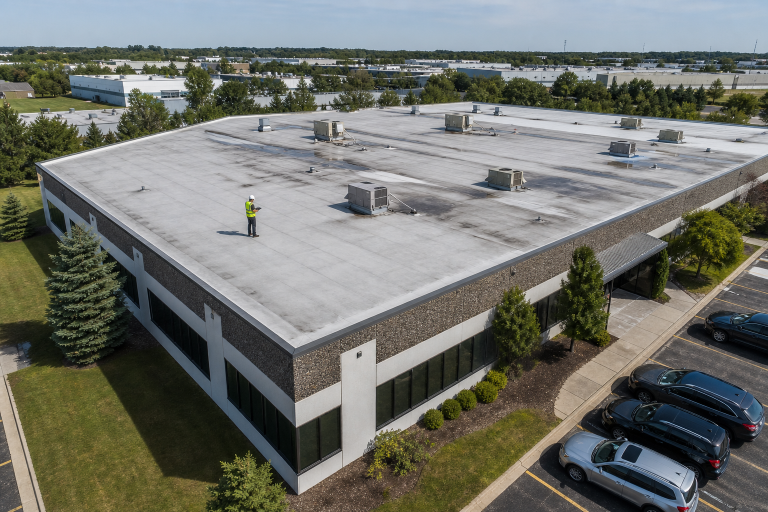
A Simple Commercial Roof Inspection Checklist
Facility staff should not access a roof unless they are trained, authorized, and equipped to do so. However, teams can use the following checklist during maintenance planning meetings or when reviewing a contractor’s findings:
- Look for standing water or areas that drain slowly after normal drying conditions.
- Check visible gutters, drains, scuppers, and downspouts for leaves, debris, or blockage.
- Note torn, lifted, cracked, blistered, punctured, or worn roofing materials.
- Review flashing around walls, curbs, vents, skylights, and rooftop equipment.
- Identify loose fasteners, damaged metal components, open seams, or deteriorated sealant.
- Check rooftop access points, skylight covers, screens, and protective guards for damage.
- Record debris buildup, plant growth, animal activity, oil residue, or repeated foot-traffic paths.
- Photograph each concern and note its location using a roof plan, room number, or nearby equipment reference.
How Often Should a Commercial Roof Be Inspected?
A tiered schedule is generally more useful than a single rule for every building. A newer, low-traffic roof in a mild climate may have different needs than an aging roof with several rooftop units, frequent service activity, and exposure to severe storms.
- Monthly: Review interior ceilings, upper-floor walls, roof access areas, and visible drainage points for warning signs.
- Seasonally: Check for debris, vegetation, ponding, and material changes associated with weather shifts.
- After major storms: Arrange a review for wind displacement, punctures, damaged components, and new water entry.
- Annually: Assess overall roof condition, repair history, budget needs, and the expected remaining service life.
- As needed: Request a professional evaluation whenever active leaks, recurring stains, or visible damage appear.
Warning Signs That Need Fast Attention
Not every concern has the same urgency, but certain signs should trigger prompt investigation. New ceiling stains, damp insulation, musty odors, recurring leaks, rust near drains or curbs, separated flashing, visible membrane damage, and loose metal components can all indicate a pathway for water. Sudden changes in indoor humidity or temperature control may also suggest that moisture has affected insulation or another part of the building envelope.
How to Prioritize Repairs
When budgets are limited, a clear priority system helps facility teams focus on the work that best protects people and operations. Start with immediate safety risks, including fragile surfaces, unsafe access points, exposed openings, or materials that could fall. Next, address active water entry that threatens occupants, electrical systems, sensitive equipment, inventory, or essential business functions.
After immediate issues are controlled, prioritize defects that can spread quickly, such as open seams, failed flashing, exposed insulation, and drainage problems. Preventive work, including drain cleaning and targeted sealant replacement, can then be scheduled before small issues become urgent. Aging roof systems should remain part of long-term budget planning rather than be addressed only after a sudden failure.
Roof Access, Equipment, and Safety
Roof work presents real fall hazards. Access should be limited to trained personnel who use safe routes, appropriate protective equipment, and site-specific procedures. Teams should never assume that an older panel, skylight, or roof surface will safely support a person. Fall protection requirements for roofing work address methods to protect workers exposed to unprotected edges and other elevated hazards.
Rooftop units, vents, solar equipment, communication systems, and service paths also deserve close attention. Vibration, equipment movement, and repeated foot traffic can affect nearby materials and penetrations. Roof condition is part of the larger building envelope, which includes the systems that separate conditioned interior space from outdoor conditions. The performance of walls, windows, roofs, and foundations can be reviewed together when facility teams are considering moisture control, insulation, and indoor comfort.
Records and Contractor Questions
Save inspection dates, weather conditions, photographs, defect locations, repair priorities, invoices, warranties, storm reports, and notes about recurring leaks. Consistent records reveal patterns, support budget discussions, and reduce confusion when staff or contractors change.
Before approving work, ask what systems the contractor regularly services, what the inspection includes, whether photographs and priorities will be provided, how occupants and equipment will be protected, which repairs are included, and how urgent leaks will be handled. A clear scope and clear documentation are often as important as the quoted price.
A 30-Day Action Plan
- Week one: Gather prior inspection reports, repair invoices, warranties, and leak records.
- Week two: Review the property from safe locations and list visible concerns.
- Week three: Evaluate drainage, access procedures, rooftop equipment, and emergency response steps.
- Week four: Set repair priorities, schedule needed inspections, and create a yearly maintenance calendar.
Conclusion
Commercial roof maintenance works best when it begins before the next leak. A manageable schedule, safe access practices, useful records, and timely repairs can help facility teams protect the building and avoid unnecessary disruption.