
Key Takeaways
- Tax Treatment: Contributions to RRSPs reduce taxable income now, but withdrawals are taxable in retirement. TFSAs use after-tax dollars, yet allow for tax-free investment growth and withdrawals.
- Withdrawal Flexibility: TFSAs offer easy, tax-free access to savings at any time, making them ideal for a range of savings goals beyond retirement.
- Impact on Benefits: RRSP withdrawals can lower eligibility for means-tested government benefits, while TFSA withdrawals do not affect these programs, such as Old Age Security.
When planning your financial future, the decision between a Registered Retirement Savings Plan (RRSP) and a Tax-Free Savings Account (TFSA) is one that many Canadians face early and often throughout their lives. Comparing RRSP vs TFSA for retirement can help clarify which account is best suited to your goals, income, and timeline. These two savings vehicles offer unique tax advantages and can play distinct roles in any long-term investment strategy. Before deciding which account to prioritize or how to allocate your savings, it is important to understand the core differences and how each might support your own financial journey.
Both RRSPs and TFSAs are powerful tools for building wealth, but their rules regarding contributions, withdrawals, and taxation make them better suited to different goals and life stages. Factors like your income, expected retirement age, and access to government benefits all come into play when choosing the account that offers the greatest tax efficiency and flexibility. Understanding these key points ensures you not only save but also maximize the value of your hard-earned money as you plan for milestones such as buying a home, sending your children to college, or retiring comfortably.
Understanding RRSPs and TFSAs
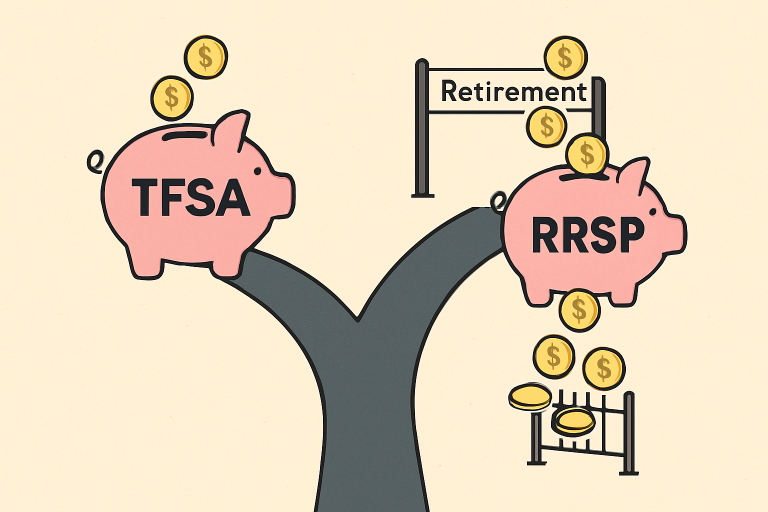
An RRSP is a government-registered account designed to encourage Canadians to save for retirement. Contributions are tax-deductible, so they help lower your taxable income for the year you contribute. Your investments (including mutual funds, stocks, and bonds) grow tax-deferred until you withdraw them, typically in retirement when your income may be lower.
In contrast, a TFSA provides no upfront tax break. Instead, your contributions are made from after-tax income, but all investment growth inside a TFSA is tax-free and can be withdrawn at any time without penalty. This makes TFSAs highly versatile, whether you’re aiming to build an emergency fund, save for a large purchase, or supplement your retirement savings.
Contribution Limits and Flexibility
For 2025, the TFSA contribution limit is $7,000 per person, regardless of income level. Any unused contributions can be carried forward indefinitely, and when you make a withdrawal, you regain that contribution room in the following calendar year. This flexibility adds significant value if you expect to access your funds before retirement.
RRSPs have a higher annual contribution ceiling: up to 18% of your previous year’s earned income, capped at a set amount determined annually by the government. Unused RRSP room also carries forward indefinitely.
Impact on Government Benefits
One crucial difference between the two accounts relates to government benefits for retirees. Withdrawals from RRSPs count as taxable income, which could reduce eligibility for programs like Old Age Security (OAS) or the Guaranteed Income Supplement (GIS). TFSAs, however, keep withdrawals out of your taxable income calculations, safeguarding your eligibility for these income-sensitive government programs. When strategizing for retirement, minimizing “clawback” risks with a TFSA can be invaluable, particularly if your retirement income is expected to fluctuate.
Choosing the Right Account for Your Goals
Consider Your Income and Future Needs
If you are in your prime earning years and in a higher tax bracket, it often makes sense to prioritize RRSP contributions, since you can claim a tax deduction now, then pay a lower tax rate on withdrawals in retirement. For younger investors, or those in lower tax brackets, the TFSA’s flexibility and tax-free growth may offer superior benefits, especially if you anticipate needing the funds for life events other than retirement.
Access to Funds
RRSPs are primarily intended for long-term saving, though government programs do allow you to withdraw for a first home purchase or post-secondary education under strict conditions. TFSAs, on the other hand, allow you to withdraw any amount at any time, penalty-free. This difference makes TFSAs attractive for those who value liquidity and anticipate changes in their financial needs over time.
Common Misconceptions
The similarities in acronyms and overlapping purposes lead to confusion for many Canadians. In fact, 32% of survey respondents did not know the defining features that separate RRSPs from TFSAs. Many assume that one is categorically better than the other, but the reality depends on your personal circumstances and goals. Dispelling these myths and increasing financial literacy are critical steps toward making sound investment decisions.
Final Thoughts
RRSPs and TFSAs each provide unique, powerful means for Canadians to grow their wealth, save efficiently, and prepare for both expected and unexpected life events. By understanding the different tax treatments, withdrawal rules, and benefit considerations, you can structure your savings in the most effective way possible. Consulting a financial advisor for personalized recommendations remains valuable, ensuring your investment strategy aligns with your life and future aspirations.