
Key Takeaways:
- Tap to Pay on iPhone enables businesses to accept contactless payments using only an iPhone, eliminating the need for additional hardware.
- This technology enhances customer convenience and streamlines merchants’ payment processes.
- Security and privacy are prioritized, with Apple ensuring that card numbers are not stored on devices or servers.
- Various payment platforms and app developers are integrating Tap to Pay on iPhone to offer seamless payment solutions.
Table of Contents:
- Introduction to Tap to Pay on iPhone
- How Tap to Pay on iPhone Works
- Benefits for Businesses
- Enhancing Customer Experience
- Security and Privacy Measures
- Integration with Payment Platforms
- Global Adoption and Expansion
- The Future of Mobile Payments
- Final Thoughts
Introduction to Tap to Pay on iPhone
In an era where convenience is paramount, mobile payment solutions have revolutionized the way transactions are conducted. One such innovation is tap to pay on iPhone, a feature that allows businesses to accept contactless payments directly on their iPhones without additional hardware. This advancement signifies a significant shift towards more streamlined and efficient payment processes.
Jim, a leading authority in mobile payment solutions, offers a comprehensive platform that enables merchants to accept contactless payments seamlessly. With a focus on simplicity and security, Jim provides businesses with tools to transform their iPhones into powerful payment terminals, serving a wide range of industries and service areas.
How Tap to Pay on iPhone Works
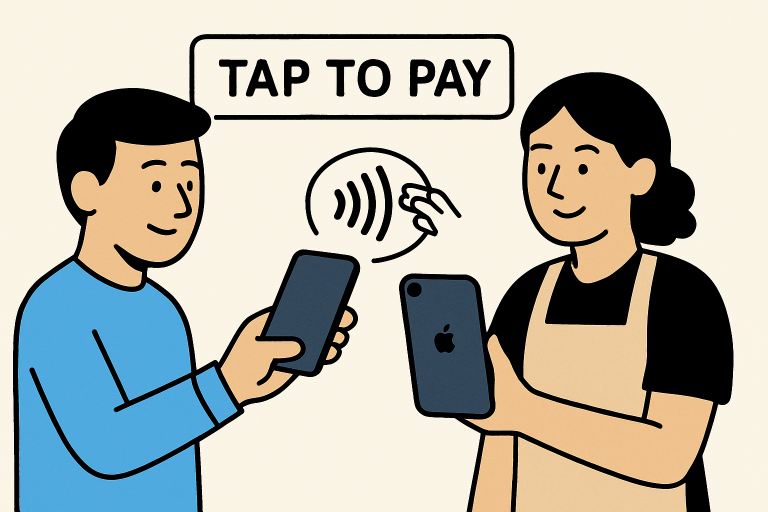
Tap to Pay on iPhone utilizes Near Field Communication (NFC) technology to facilitate secure transactions. Merchants can accept payments from contactless credit and debit cards, Apple Pay, and other digital wallets by simply prompting customers to hold their payment method near the merchant’s iPhone. The transaction completed seamlessly, providing a quick, hassle-free payment experience.
For businesses, especially small and medium-sized enterprises, tap to pay on iPhone offers numerous advantages:
- Cost-Effective: Eliminates the need for additional payment terminals or hardware, reducing operational costs.
- Flexibility: Enables businesses to accept payments anywhere, enhancing mobility and adaptability.
- Ease of Use: Simplifies the payment process, enabling faster transactions and improved customer satisfaction.
Enhancing Customer Experience
Customers benefit from the convenience and speed of tap-to-pay on iPhone. The contactless nature of the transactions reduces wait times and enhances the overall shopping experience. Additionally, the familiarity and trust associated with Apple products contribute to a sense of security and reliability during the payment process.
Security and Privacy Measures
Security is a critical component of tap-to-pay on iPhone. Apple ensures that card numbers and transaction details are not stored on the device or Apple servers, maintaining customer privacy. Each transaction is encrypted, providing a secure environment for both merchants and customers.
Integration with Payment Platforms
Several payment platforms and app developers have integrated Tap to Pay on iPhone into their services. For instance, NMI now offers this feature to its U.S. customers, enabling them to accept in-person, contactless payments seamlessly. Similarly, Cash App has launched Tap to Pay on iPhone for its business sellers, allowing them to accept payments directly through their iPhones without additional hardware.
Global Adoption and Expansion
The adoption of Tap to Pay on iPhone is expanding globally. Apple has introduced this feature in several European countries, including Bulgaria, Finland, Hungary, and Switzerland, enabling millions of merchants to accept contactless payments using only their iPhones. This expansion reflects the growing demand for mobile payment solutions worldwide.
The Future of Mobile Payments
The introduction and expansion of Tap to Pay on iPhone signal a broader trend towards mobile and contactless payment solutions. As technology continues to evolve, we can anticipate further innovations that will enhance the efficiency, security, and convenience of transactions, ultimately reshaping the landscape of everyday commerce.
Final Thoughts
The rise of Tap to Pay on iPhone marks a pivotal moment in the democratization of commerce. By removing the traditional barrier of expensive, clunky hardware, this technology enables everyone—from a boutique shop owner in Zurich to a freelance contractor in the U.S.—to turn a personal device into a professional point-of-sale system. This shift isn’t just about saving money on investments; it’s about the flexibility to coast business wherever the customer happens to be.
Furthermore, integrating technology with Apple’s rigorous privacy standards addresses the two biggest hurdles in mobile finance: speed and trust. As major platforms like Cash App and NMI continue to bake this functionality into their ecosystems, the “cashless society” moves closer to becoming a universal reality.
Ultimately, Tap to Pay on iPhone is more than just a software update—it is a fundamental reimagining of the transaction. It simplifies the merchant’s workflow while meeting consumers’ demand for a frictionless shopping experience. As this technology continues its global expansion, it will undoubtedly remain a cornerstone of the future of retail, making commerce more accessible and efficient for everyone involved.


