
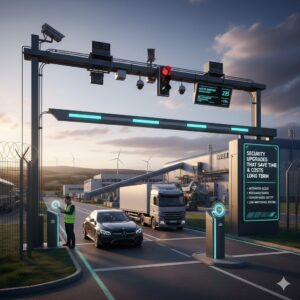
Security is no longer just about locking gates and monitoring cameras—it’s a critical part of operational efficiency. Across sectors like construction, mining, and commercial property management, the right security upgrades are reducing costs, improving safety, and saving time in measurable ways. Businesses still relying on outdated systems may be missing opportunities to streamline operations and cut long-term expenses.
Automated Gate and Access Systems
Manual gates and physical key systems often require staff oversight, increase access delays, and are prone to security lapses. Upgrading to automated gates significantly reduces these inefficiencies. When paired with swipe cards, keypads, or RFID access, these systems allow quick, controlled entry without manual intervention.
The result is faster access, fewer staffing needs, and reduced downtime—particularly valuable on sites with frequent vehicle and personnel movement. Over time, businesses see savings in both labour costs and productivity losses caused by slow or unreliable access.
Integrated Traffic Management Solutions
In high-movement environments like logistics hubs, infrastructure projects, and mining sites, managing vehicle traffic effectively is essential to maintaining site efficiency and avoiding costly delays. Automated systems, such as programmable traffic lights and sensor-triggered boom gates, allow entry points to function dynamically, adapting to real-time site conditions without manual control.
These upgrades reduce the need for on-site supervision, prevent congestion, and improve overall safety. Larger providers in this space, including Rotech Australia, offer solutions that support consistent and low-maintenance coordination across complex sites. Over time, this results in fewer operational disruptions and more stable running costs.
Sensor-Based Safety Enhancements
Installing photoelectric sensors, safety loops, and vehicle detection systems prevents accidents by ensuring gates and barriers respond accurately to movement. This reduces injury risks, operational stoppages, and maintenance caused by misuse.
These systems operate passively but effectively—no staff needed to monitor gate operation, no unexpected collisions to handle. Fewer accidents mean fewer insurance claims, lower liability exposure, and less unplanned downtime.
Centralised Access Control Integration
Integrating gates and barriers with a central access management platform enables remote control, monitoring, and data reporting. Authorised personnel can grant or restrict access, track entry logs, and adjust permissions without being on-site.
For organisations managing multiple facilities, this reduces the need for on-location security staff and travel between sites. It also simplifies compliance and audit preparation, saving time typically spent on manual record keeping.
Low-Maintenance, Durable Systems
Many older gate systems are not only less efficient but also costly to maintain. Upgrading to modern, robust equipment designed for longevity reduces both the frequency and cost of repairs. Components are easier to replace, and some systems include built-in diagnostics that alert managers before failures occur.
Modern access control equipment is often rated using mean cycles between failure (MCBF), which helps indicate reliability over time. A higher MCBF rating means fewer breakdowns, lower maintenance demands, and a significantly reduced total cost of ownership across the product’s lifecycle.
Scalable and Standards-Compliant Infrastructure
Security upgrades that align with industry compliance requirements avoid future penalties and retrofits. Modern systems are also scalable—new gates, access points or users can be added without overhauling the infrastructure.
This adaptability saves money as the site grows or changes, protecting the initial investment and supporting long-term operational continuity. Businesses avoid the inefficiencies and expenses of rebuilding incompatible legacy systems.
Smarter Systems, Leaner Operations
For organisations that manage physical sites, security upgrades are not just protective—they are strategic. From automated gates to integrated access platforms and traffic control systems, each upgrade adds long-term value by reducing manual effort, lowering ongoing costs, and improving operational flow.


