
Introduction
Child custody disputes are some of the most emotionally charged and complex issues that families face during the course of a divorce or separation. For parents in Boston, the process can be particularly stressful, given the need to make decisions that will have a lasting impact on a child’s well-being and future development. Judges overseeing these cases must weigh a multitude of factors, balancing legal requirements and the unique needs of each family to foster a stable, secure environment for the child involved. Since any custody battle can shape your child’s emotional and psychological health, being well-prepared before stepping into court is crucial. That’s why many parents, especially those without legal experience, consult a child custody lawyer near me for advice or representation—to better understand their rights and how to present their case within the boundaries of Massachusetts law.
Above all, the guiding principle in every custody case is the “best interests of the child.” This standard is not only a legal mandate but also a practical approach that seeks to minimize disruption, ensure continuity, and provide the child with emotional and physical security. Judges scrutinize the circumstances presented by both parties, including the home environment, established routines, relationships, and the child’s adaptability, to tailor each ruling to the particular family. The “best interests” framework also applies when developing parenting plans, determining each parent’s role as a caregiver, and setting visitation schedules. Because each family’s situation is different, courts reject a one-size-fits-all approach and instead prioritize arrangements that offer the greatest stability and opportunities for the child’s healthy development.
Key Factors Considered by Judges
Boston judges use a comprehensive, multi-layered approach to determine child custody cases. No single factor is decisive; rather, the court weighs several elements together, always focusing on what will best serve the child’s needs. Key considerations include, but are not limited to:
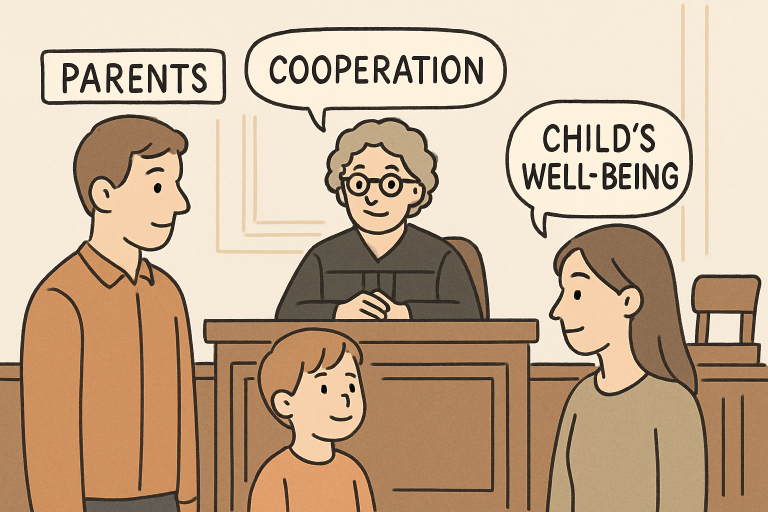
- Child’s Well-being: Judges examine the child’s physical and emotional health, seeking to understand the impact of each parent’s home and lifestyle on the child’s growth and daily life. Considerations include the safety of the living space, access to medical care, and support for education.
- Parental Fitness: The ability of each parent to provide a nurturing, safe, and consistent environment is closely scrutinized. This involves evaluating a parent’s mental and physical health, reliability, work schedules, and any history with criminal or protective services. Judges also look at whether any substance misuse, neglect, or abuse has occurred in the past.
- Parent-Child Relationship: The emotional attachment between the child and each parent is fundamental. Judges address questions such as which parent has acted as the primary caregiver, the quality and consistency of contact, and the strength of each bond. The depth and nature of how parents interact with the child—whether comforting, encouraging, educating, or disciplining—are all reviewed.
- Child’s Preference: In some cases, especially when the child is older or displays significant maturity, the court will consider the child’s custodial preferences. However, these statements are part of a larger picture and are evaluated alongside other evidence of the child’s needs and circumstances.
- Stability and Continuity: Judges typically seek to minimize upheaval in a child’s life. Consistency—such as remaining in the same school, maintaining established friendships, and living in a familiar neighborhood—is often given considerable weight. The idea is to support the child’s adjustment through a turbulent period by keeping aspects of their day-to-day life as unchanged as possible.
Additionally, courts may consider each parent’s willingness to support the child’s relationship with the other parent. Cooperation and a demonstrated commitment to encouraging a healthy parent-child relationship on both sides can positively influence the judge’s decision.
Legal Framework in Massachusetts
In Boston, as in every city throughout the state, child custody disputes must adhere to Massachusetts General Laws. These laws explicitly require that all custody decisions prioritize the child’s best interests above all else. Massachusetts family courts are empowered to make or modify custody arrangements at any time if a significant change occurs, ensuring ongoing protection and adjustment for children as their circumstances evolve.
In recent years, Massachusetts has taken steps to align its child custody laws with broader national practices, notably by moving toward the adoption of the Uniform Child-Custody Jurisdiction and Enforcement Act (UCCJEA). This act is designed to minimize confusion when families cross state lines by clarifying which state court has authority to hear a particular case. The UCCJEA helps prevent situations in which parents may “forum shop” for a more favorable custody outcome by moving, and it fosters collaboration between states to protect children from being caught in drawn-out interstate custody disputes. Ultimately, these improvements are intended to reduce delays and provide children and parents with more predictable, streamlined legal proceedings (Uniform Child Custody Jurisdiction and Enforcement Act (UCCJEA) | Wex | US Law | LII / Legal Information Institute).
Role of the Guardian ad Litem
In more complex or contentious cases, judges may appoint a Guardian ad Litem (GAL) to investigate the circumstances and make thorough, independent recommendations to the court. The GAL serves as a child’s advocate, with a duty to look beyond the arguments and accusations presented by each parent. By interviewing parents, the child, caregivers, teachers, doctors, and even relatives, the GAL gathers comprehensive information about the family’s situation.
After collecting this information, the GAL prepares a detailed report summarizing their findings and suggesting custody and parenting time arrangements that best serve the child’s interests. While the judge is not required to follow these recommendations, they are typically given significant consideration because the GAL is presumed to provide an impartial perspective. The GAL’s report can be especially important when allegations of neglect, abuse, or parental unfitness are involved, ensuring the child’s needs are at the forefront of the decision, particularly when parents are unable to agree or when the safety of the child may be compromised.
Impact of Parental Conduct
The behavior and actions of each parent—both before and during legal proceedings—are pivotal in custody determinations. Courts look carefully at evidence of abuse, neglect, substance abuse, or criminal activity, understanding that even isolated incidents can have a profound, negative impact on a child’s well-being. In cases where credible allegations are raised, judges may order investigations, drug testing, or supervised visitation while examining the credibility and context of any claims.
On the other hand, demonstrating stability, responsibility, and a consistent involvement in the child’s daily life can significantly bolster a parent’s case. Courts are more likely to grant favorable custody arrangements to parents who communicate effectively, comply with court orders, maintain constructive routines, and demonstrate genuine concern for the child’s health and happiness. Ultimately, the court’s objective is to ensure that any arrangement encourages healthy relationships and stable development, as long as doing so does not place the child in danger.
Temporary Custody Hearings
Sometimes, emergency or temporary custody hearings are required, especially in situations involving accusations of physical or emotional harm. Massachusetts law mandates that such hearings be conducted within 72 hours after a child is removed from an unsafe environment, reflecting the system’s commitment to ensuring swift action when a child’s well-being is at stake. Despite these requirements, logistical or bureaucratic delays occasionally prolong uncertainty for parents and children alike. State officials and advocacy organizations continue to call for streamlined processes and increased resources—recognizing the anxiety and disruption these interim periods can cause for families. Temporary custody orders remain in effect until a final hearing, at which more comprehensive custody arrangements are established based on all available evidence.
Conclusion
Navigating a child custody case in Boston is rarely easy, but it is possible to achieve positive outcomes when you understand the legal criteria guiding a judge’s decision. Parents who focus on the child’s needs, present clear documentation of their fitness and involvement, and adhere to courtroom expectations often find the process less daunting and more successful. Above all, preparation is key; securing knowledgeable legal advocacy can help families safeguard their children’s best interests and foster the stability needed for future growth and healing.