
The Foundation: Research, Planning, and Positioning
 The digital world offers vast opportunities for businesses. But standing out requires a clear plan. A strong online business strategy is your roadmap to success in this crowded marketplace. It’s more than just having a website; it’s about navigating the entire digital landscape purposefully.
Online purchases are growing fast. Soon, about a quarter of all sales will happen online. Most people already shop for and research products online weekly. This means every business needs a powerful digital presence to thrive.
This guide will help you build a winning online strategy. We will cover key stages, from understanding your market to developing your online home. We will also explore effective digital marketing and how to measure your results. A solid online presence often includes a great website and, for maximum reach and engagement, a clear mobile app strategy. By the end, you’ll have a blueprint for long-term growth and stability.
An effective online business strategy begins long before any code is written or marketing campaigns are launched. It starts with a deep understanding of your market, your potential customers, and your unique place within the digital ecosystem. Without this foundational research and planning, even the most brilliant ideas can falter.
What is an online business strategy, and why is it crucial for success? An online business strategy is a carefully crafted plan that outlines how a company will leverage the digital landscape to achieve its objectives. It’s an intentional roadmap that adapts to the internet’s dynamic nature, serving as a framework to improve visibility, engage audiences, drive sales, and foster long-term growth. It’s crucial because the digital marketplace is fiercely competitive, with consumers constantly bombarded by choices. A well-defined strategy ensures your efforts are targeted, efficient, and aligned with your overarching business goals.
The digital field is not just an add-on; it’s often the primary battleground for customer attention. By 2026, approximately a quarter of all purchases are projected to occur online, underscoring the imperative for businesses to have a robust digital presence. This shift in consumer behavior, accelerated by events like the COVID-19 pandemic, has reshaped how people shop and research products, making a strategic online approach non-negotiable.
Defining Your “Who” and “Why”
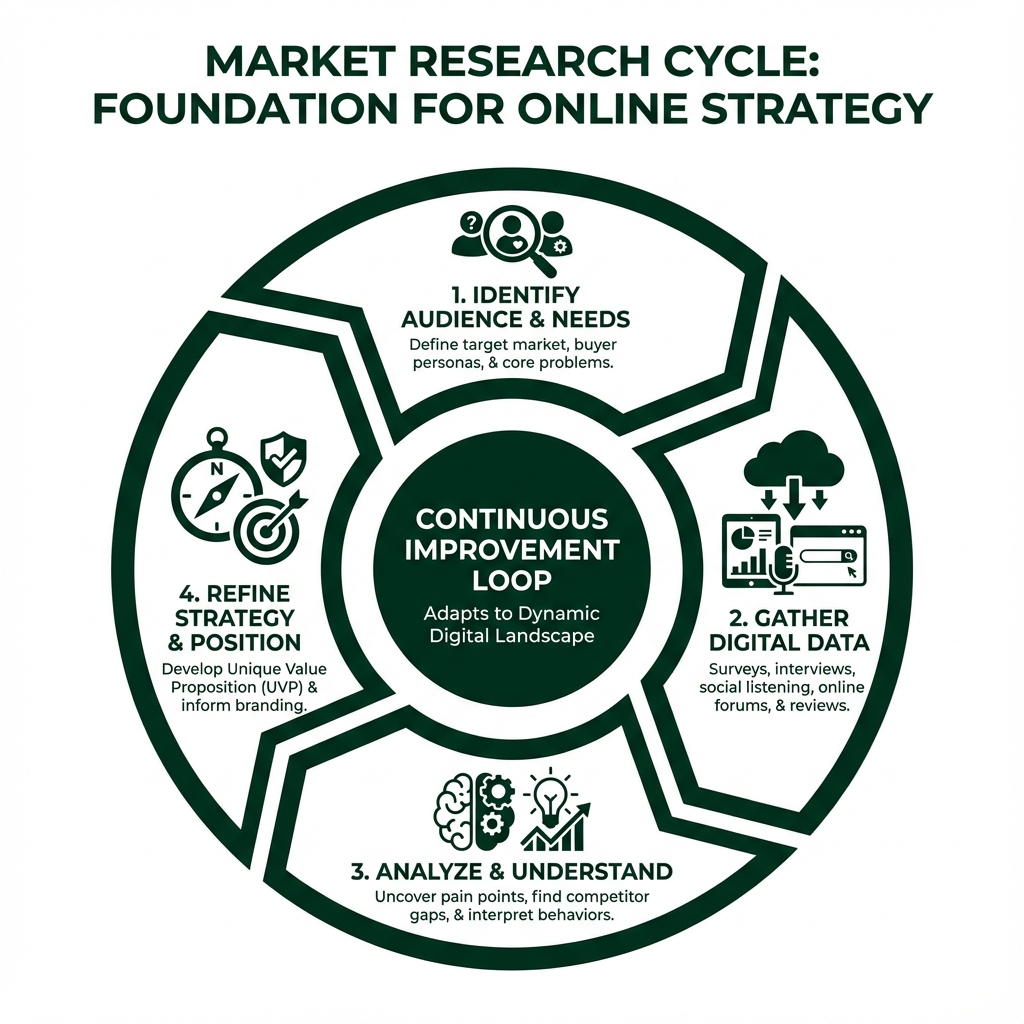
Before you can effectively reach your audience, you must first understand them. This involves comprehensive market research to identify your target market and understand customer needs in the digital space.
How can businesses effectively research their target market and understand customer needs in the digital space? Start by creating detailed buyer personas. These are semi-fictional representations of your ideal customers, built from data and educated guesses about their demographics, behaviors, motivations, and pain points. Conduct market surveys, interviews, and focus groups to gather direct insights. Pay attention to online forums, social media discussions, and customer reviews to uncover common problems and unmet needs.
For instance, consider Pepper, an underwear brand that successfully developed bras specifically for small-chested women. They identified a significant pain point overlooked by mainstream brands and offered a custom solution. Similarly, The Ridge carved out a niche by positioning itself as the minimalist, RFID-blocking wallet, appealing to a specific segment of consumers.
Your products or services should aim to solve a genuine problem or fulfill a distinct desire for your target audience. This problem-solving approach is critical for differentiation in a crowded market. Analyzing competitors is also vital. Understand their strengths, weaknesses, and what makes them unique. This helps you identify market gaps and develop your own Unique Value Proposition (UVP) – what makes your offering distinct and superior.
Financial and Legal Framework
Launching and operating an online business requires careful financial planning and adherence to legal requirements.
What are the financial considerations and budgeting strategies for implementing an online business strategy? One advantage of online businesses is the potential for a low startup cost. You can offer services like freelance work, photography, bookkeeping, or personal training with minimal overhead. The primary costs often include setting up your business website, which can be surprisingly affordable. For example, registering a domain name and basic hosting can cost as little as $2 to $20 annually with providers like GoDaddy or Namecheap.
Budgeting for an online strategy involves allocating funds across various areas:
- Website Development & Maintenance: Initial build, hosting, security, updates.
- Digital Marketing: SEO, content creation, paid ads, social media campaigns, email marketing.
- Product/Service Sourcing: Inventory, manufacturing, and dropshipping fees.
- Tools & Software: CRM, analytics, email marketing platforms, design software.
- Legal & Compliance: Business registration, licenses, privacy policies.
It’s crucial to track expenses diligently, especially for freelancers or those with side income from e-commerce, where tools like a 1099 tax calculator can help estimate tax obligations.
What are the legal and security considerations for an online business strategy? Legal compliance is paramount. This includes registering your business, obtaining necessary licenses, and understanding consumer protection laws. For online businesses, data privacy regulations like GDPR (General Data Protection Regulation) and CCPA (California Consumer Privacy Act) are critical. You must clearly communicate how customer data is collected, stored, and used through a transparent privacy policy.
Security is another cornerstone. Cybercriminals are a constant threat, and data breaches can be incredibly costly, averaging $4.45 million in 2025. Protecting customer information is not just a legal obligation but also a trust-building exercise. Implement SSL Certificates (HTTPS) to secure data transmission, ensure PCI compliance if you process credit cards, and use fraud detection tools. Two-factor authentication (2FA) adds an extra layer of security for both customers and your internal systems.
Building Your Digital Headquarters: Website and Online Presence
Your website is the digital storefront of your business. It’s where potential customers learn about your brand, browse your offerings, and make purchases. A well-designed and optimized online presence is fundamental to your online business strategy.
What are the key steps involved in developing a strong online presence, including website development and optimization? The journey begins with registering a memorable, relevant domain name for your brand. Next, choose a reliable web hosting provider. For many, especially small businesses, website builders offer an accessible entry point. Platforms like Shopify, Wix, Mailchimp, or Squarespace provide user-friendly interfaces for selecting themes, customizing pages, creating content, and setting up payment gateways without extensive technical knowledge.
User Experience (UX) and User Interface (UI) are critical. Your website should be intuitive, easy to navigate, and visually appealing. Given that over 73% of e-commerce sales will be made on mobile devices in 2024 and that more than 50% of e-commerce traffic originates from mobile devices, a mobile-first design is no longer optional. If customers have to pinch and zoom, they’ll bounce faster than a bad check.
Page speed is equally important. Studies show that 47% of consumers expect a site to load in 2 seconds or less, and each second of lag can decrease conversions by 7%. Optimize images, leverage Content Delivery Networks (CDNs), and invest in faster hosting to ensure a snappy experience.
A solid mobile app strategy can further enhance your digital presence, providing a dedicated, often more engaging channel for customer interaction, especially for businesses looking to offer unique features or a highly personalized experience.
Crafting a High-Converting Website
Beyond basic functionality, certain elements are crucial for turning visitors into customers.
- Simple Navigation: Users should find what they’re looking for in three clicks or less.
- Clear Calls-to-Action (CTAs): Buttons like “Buy Now,” “Add to Cart,” or “Learn More” should be prominent and unambiguous.
- High-Quality Product Photography & Videos: Since customers can’t physically interact with products online, compelling visuals are essential. Videos can boost conversions by up to 80% by showing products in use.
- SEO-Optimized Product Pages: Use relevant keywords in titles, descriptions, and image alt text to improve search engine visibility. Brands like Biossance effectively optimize their product pages to rank high for specific search terms.
- Customer Reviews and Ratings: 93% of customers read reviews before buying. Encourage customers to leave feedback, as even well-managed negative reviews can build credibility.
- Secure Payment Gateways: Offer multiple trusted payment options (credit cards, PayPal, digital wallets). A lack of trust in payment methods causes 17% of cart abandonments.
- SSL Certificates: Ensure your site uses HTTPS to encrypt data and build trust.
Establishing Your Online Business Strategy for Security
Security isn’t just a technical detail; it’s a fundamental aspect of your online business strategy that directly impacts customer trust and your bottom line.
What role does security play in an online business strategy? It’s a critical role, with the average cost of a data breach projected at $4.45 million in 2025 and an estimated $48 billion in fraud losses that year. Investing in robust security measures is non-negotiable.
Key security considerations include:
- SSL Certificates (HTTPS): Essential for encrypting data between the user’s browser and your server, signaling to customers that their information is safe.
- PCI Compliance: If your business handles credit card information, you must adhere to the Payment Card Industry Data Security Standard (PCI DSS) to protect sensitive cardholder data.
- Fraud Detection Tools: Implement systems to identify and prevent fraudulent transactions, helping your business avoid significant losses. Many e-commerce platforms, such as Shopify, WooCommerce, and Magento, offer native fraud protection.
- Two-Factor Authentication (2FA): Add an extra layer of security for both customer accounts and your internal systems.
- Firewalls & Bot Protection: Prevent malicious traffic and automated attacks that can compromise your site or customer data.
By prioritizing these security measures, you not only protect your business from financial and reputational damage but also build a foundation of trust with your customers, encouraging repeat business.
Growth Engine: Your Digital Marketing and Sales Funnel
Once your online headquarters are established, the next step is to drive traffic and convert visitors into loyal customers. This is where your digital marketing and sales funnel comes into play, forming the core of your online business strategy.
What are the most effective digital marketing strategies for reaching and engaging target audiences? Digital marketing encompasses a wide array of tactics designed to connect with your audience online. With 5.45 billion internet users worldwide as of July 2024, the opportunities for reach are immense. Effective strategies often involve a combination of:
- Search Engine Optimization (SEO): Optimizing your website to rank higher in search engine results.
- Content Marketing: Creating valuable, relevant content to attract and engage a clearly defined audience.
- Social Media Marketing: Leveraging platforms like Facebook, Instagram, TikTok, and LinkedIn to build brand awareness and interact with customers.
- Email Marketing: Sending targeted messages to subscribers to nurture leads, drive sales, and build loyalty.
- Paid Advertising: Running campaigns on search engines (PPC) and social media platforms to reach specific demographics.
A comprehensive digital strategy, like those offered by companies specializing in comprehensive digital strategy, ensures all these channels work in harmony to achieve your business goals.
Content and SEO: Attracting Organic Traffic
Content marketing and SEO are two sides of the same coin, working together to attract organic traffic and establish your brand as an authority.
What role does content marketing play in an online business strategy, and how can it be optimized? Content marketing is about creating and distributing valuable, relevant, and consistent content to attract and retain a clearly defined audience — and ultimately drive profitable customer action. It plays a crucial role in building brand awareness, establishing thought leadership, and nurturing leads. Companies that run blogs generate 55% more website traffic than those without.
Optimization involves:
- Audience Identification: Tailoring content to your buyer personas’ interests and pain points.
- Content Selection: Utilizing various formats like blog posts, articles, videos, infographics, and case studies. For example, YouTube is a globally recognized platform with over two billion logged-in monthly users, making video content a powerful tool.
- Keyword Research: Identifying terms your target audience uses to search for information.
- On-Page SEO: Optimizing content with relevant keywords, meta descriptions, and proper heading structures.
- Off-Page SEO: Building high-quality backlinks from reputable sites to boost domain authority.
- Voice Search Optimization: With 55% of households projected to have smart speakers in 2025, optimizing for long-tail, conversational keywords is increasingly important.
By providing consistent, high-quality content, you answer customer questions, solve their problems, and guide them through their buyer’s journey, ultimately leading them to your products or services.
Choosing the Right Digital Marketing Online Business Strategy
Selecting the right channels and tactics is crucial for maximizing your marketing efforts.
How can businesses leverage social media platforms to build brand awareness and drive customer interaction? Social media is more than just a place to post updates; it’s a dynamic arena for brand building and direct customer engagement.
- Platform Selection: Choose platforms where your target audience spends the most time. TikTok and Facebook offer audience insights tools to help you identify where your customers are.
- Consistent Branding: Maintain a unified brand voice and visual identity across all platforms.
- Engaging Content: Share valuable content, run polls, host Q&As, and use trending formats. Brands like Pashion Footwear, which sells convertible heels, have leveraged TikTok to reach millions by focusing on the problem their product solves.
- Direct Interaction: Respond to comments, messages, and reviews promptly to foster community and loyalty.
How can businesses build customer loyalty and encourage repeat purchases through their online strategy? Customer loyalty is the bedrock of long-term growth.
- Personalized Experiences: Use customer data to offer custom product recommendations and customized communication. Skincare brand Skin Inc. launched a “skin identity check” survey to recommend personalized regimens, quadrupling revenue and doubling conversion rates.
- Post-Purchase Engagement: Send personalized follow-up emails, as Curlsmith does with reorder reminders and complementary product suggestions.
- Loyalty Programs: Reward repeat customers with points, exclusive discounts, or early access to new products. Bouclème sends simple emails to remind customers about their loyalty points.
- Subscription Models: For replenishable products, offer subscription options with discounts, such as Stay Flexy, to drive recurring revenue and customer convenience.
- Exceptional Customer Service: Make returns easy and hassle-free. A 2022 survey found that 96% of customers would buy from a brand again if returns were “very easy.” Brands like Gymshark use partners like Happy Returns to streamline this process.
- Abandoned Cart Recovery: With 69% of online shopping carts abandoned, sending personalized emails with incentives (like those from Braxley Bands) can drive significant sales recovery. Email marketing, on average, yields $42 for every dollar spent, making it a highly effective channel.
Leveraging Social and Paid Channels
A powerful digital marketing online business strategy effectively combines organic and paid efforts to create a synergistic approach.
- Social Commerce: Platforms like Instagram and TikTok are no longer just for memes; they’re becoming direct sales channels. Social commerce is projected to reach $1.2 trillion by 2025. Businesses can sell directly on these platforms, seamlessly integrating shopping experiences into users’ feeds.
- Paid Advertising: Use platforms like Google Ads and social media ads (Facebook, Instagram, TikTok) to target specific demographics with precision. A/B test your ad creatives and targeting parameters to optimize for conversions.
- Retargeting Campaigns: Re-engage visitors who have interacted with your website or ads but haven’t converted. These campaigns serve as gentle reminders that often lead to higher conversion rates.
- Influencer Marketing: Partner with influencers whose audience aligns with your brand. While large influencers are popular, micro-influencers with strong, engaged communities can be incredibly effective, and influencer marketing is estimated to reach $21.1 billion in 2023.

Measurement and Evolution: Ensuring Long-Term Success
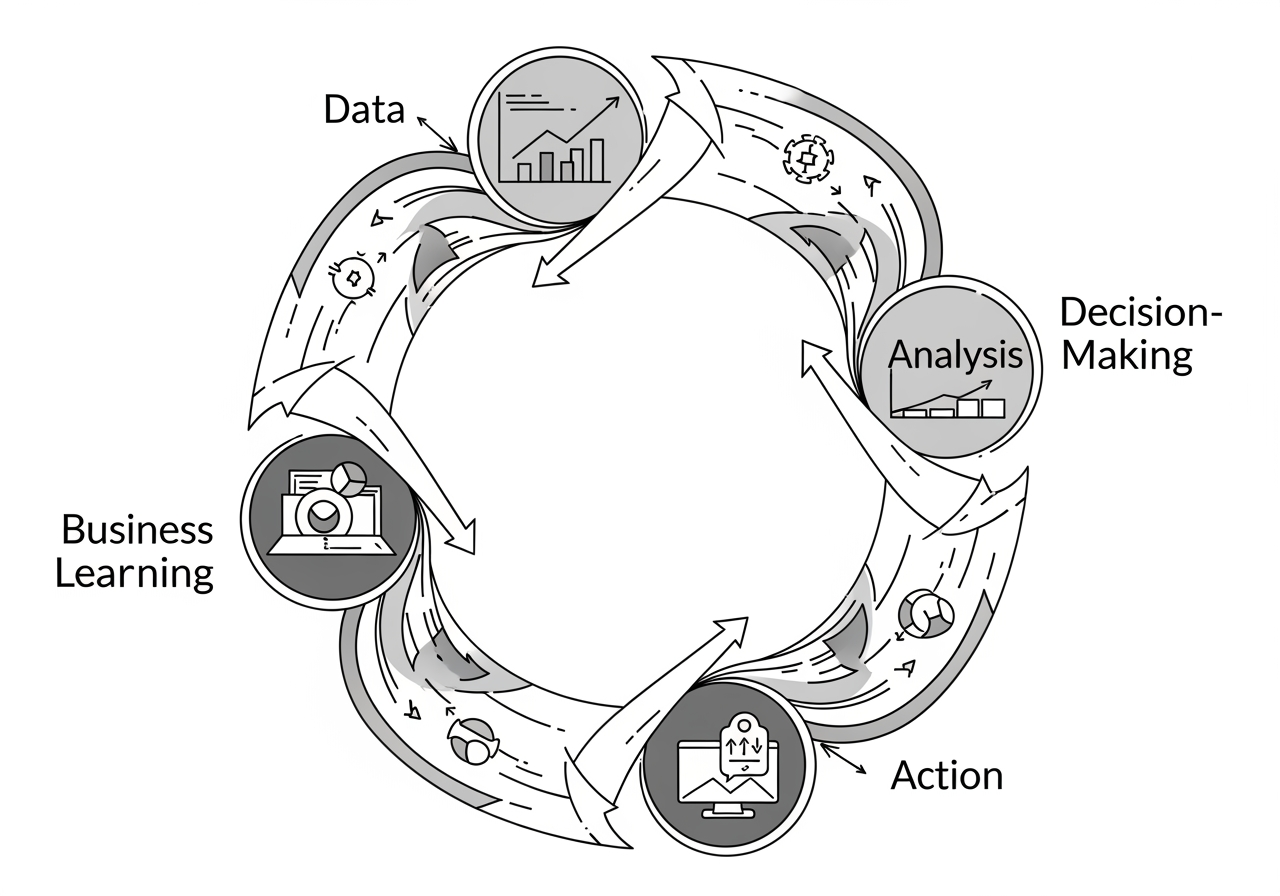
An online business strategy is not a static document; it’s a living blueprint that requires continuous monitoring, analysis, and adaptation. To ensure long-term growth and stability, businesses must measure their efforts and be prepared to evolve.
How can businesses measure the success of their online marketing efforts and key performance indicators (KPIs)? Measuring success is fundamental to understanding what’s working and what isn’t. Key Performance Indicators (KPIs) provide quantifiable metrics to track progress towards your goals. Important KPIs for online businesses include:
- Website Traffic: Total visitors, unique visitors, traffic sources.
- Conversion Rate: The percentage of visitors who complete a desired action (e.g., purchase, sign-up).
- Customer Acquisition Cost (CAC): The average cost to acquire a new customer.
- Customer Lifetime Value (CLV): The predicted revenue a customer will generate over their relationship with your business.
- Average Order Value (AOV): The average amount spent per order.
- Bounce Rate: The percentage of visitors who leave your site after viewing only one page.
- Return on Investment (ROI): The profitability of your marketing campaigns.
Tools like Google Analytics, heatmaps, and CRM systems are essential for collecting and interpreting this data. Regular A/B testing of website elements, ad copy, and email subject lines can provide insights for continuous optimization. For instance, AI-powered recommendations can boost conversion rates by 30%, highlighting the impact of data-driven personalization.
Developing a Flexible Online Business Strategy
The digital landscape is constantly shifting, driven by technological advancements and changing consumer behaviors. A successful online business strategy must be inherently flexible and ready to adapt.
What are the best practices for adapting an online business strategy to market changes and technological advancements?
- Continuous Learning & Monitoring: Stay abreast of industry trends, algorithm updates (especially for SEO and social media platforms), and emerging technologies.
- Iterative Improvement: Accept an agile approach. Rather than rigid long-term plans, set shorter-term goals, implement changes, measure results, and iterate.
- Gather Customer Feedback: Actively solicit and listen to customer feedback. Their evolving needs and preferences should directly inform your strategy adjustments.
- Technological Integration: Explore how new technologies can improve your strategy.
- AI & Machine Learning: AI is rapidly redefining marketing. 60% of marketing executives believe AI will have reshaped marketing by 2025. AI can power personalized recommendations, automate customer service (chatbots), and optimize ad targeting.
- Augmented Reality (AR) & Virtual Reality (VR): These technologies offer immersive brand interactions. 71% of consumers say they would make more frequent purchases if they could use AR, allowing for virtual try-ons or product visualization in their own space.
- Blockchain & Data Privacy: As concerns about data security and transparency grow, blockchain technology can improve trust in digital advertising by ensuring transparent ad tracking. Furthermore, 76% of consumers would not engage with a company if they had data privacy concerns.
How can businesses create a flexible and evolving online business strategy to ensure long-term growth and stability? Build a feedback loop into your operations. Regularly review your KPIs, conduct market analysis, and evaluate competitor actions. Be prepared to pivot tactics, reallocate budgets, or even redefine your product offerings based on these insights. This proactive approach allows you to anticipate changes rather than merely react to them, ensuring your online business strategy remains relevant and effective in a digital world.
Frequently Asked Questions about Online Business Strategy
Can I start an online business with a small budget?
Absolutely! Many online business models, such as freelance services, dropshipping, or selling digital products, can be started with very minimal upfront investment. Your primary costs might include a domain name and basic web hosting, which can cost as little as $2-$20 per year. The key is to focus on leveraging free or low-cost marketing channels initially, like organic social media and content marketing, and reinvesting profits as you grow.
How do I measure the success of my online strategy?
Measuring success involves tracking Key Performance Indicators (KPIs) that align with your business goals. These can include website traffic, conversion rates, customer acquisition cost (CAC), customer lifetime value (CLV), and return on investment (ROI) for your marketing campaigns. Use analytics tools like Google Analytics to gather data, and regularly review these metrics to understand performance and identify areas for improvement.
How often should I update my online business strategy?
An online business strategy is a living document, not a static one. We recommend reviewing and updating your plan at least quarterly, and conducting a more comprehensive overhaul annually. However, be prepared to make adjustments more frequently in response to significant market changes, new technological advancements, competitor actions, or shifts in customer behavior. Agility and continuous adaptation are key to long-term success in the digital space.
Your Blueprint for Digital Dominance
An online strategy is not a static document but a living blueprint for growth. By focusing on a strong foundation, building a user-centric digital presence, and executing a data-driven marketing plan, you can steer the competitive online landscape and achieve sustainable success. The key is to remain agile, continuously measure your results, and adapt to the changing digital world.
Ready to build a winning strategy that drives real results? The experts at Synergy Labs specialize in creating custom software and mobile app solutions that give businesses a competitive edge. Contact Synergy Labs today to turn your strategic vision into a reality.

